Introduction & Analysis
This collection of open-source news articles published over the past week highlights significant events and issues concerning Myanmar. They present a snapshot of the country's safety and security landscape.
- Conflict: Junta airstrikes killed at least 426 civilians across Myanmar in 37 mass-casualty incidents between January and March 2026, while ground offensives in Pakokku displaced over 20,000 people and a 300-vehicle reinforcement convoy reached Kachin State after sustained resistance clashes.
- Diplomacy & Regional: India hosted Min Aung Hlaing for a five-day visit culminating in rare earth and maritime security agreements with Modi on June 1, drawing sharp condemnation from the NUG and resistance groups, while Timor-Leste's Ramos-Horta separately proposed a retired Southeast Asian general lead unconditional peace talks.
- Economy & Trade: The Myawaddy–Mae Sot Friendship Bridge No. 2 partially reopened on May 28 with twice-daily trial truck crossings after nearly ten months of closure, even as Myanmar farmers face compounding fertiliser and fuel shortages worsened by the Strait of Hormuz standoff.
- Accountability & Repression: Civil society filed a complaint with Thailand's human rights commission on May 25 targeting PTT, PTTEP, and Northern Gulf Petroleum over junta revenue flows, while Iceland withdrew Ko Ko Latt as honorary consul following JFM evidence of ties to EU-sanctioned entities, and platform failures left 91 percent of exile media outlets exposed to digital attacks during the junta's elections.

ASEAN
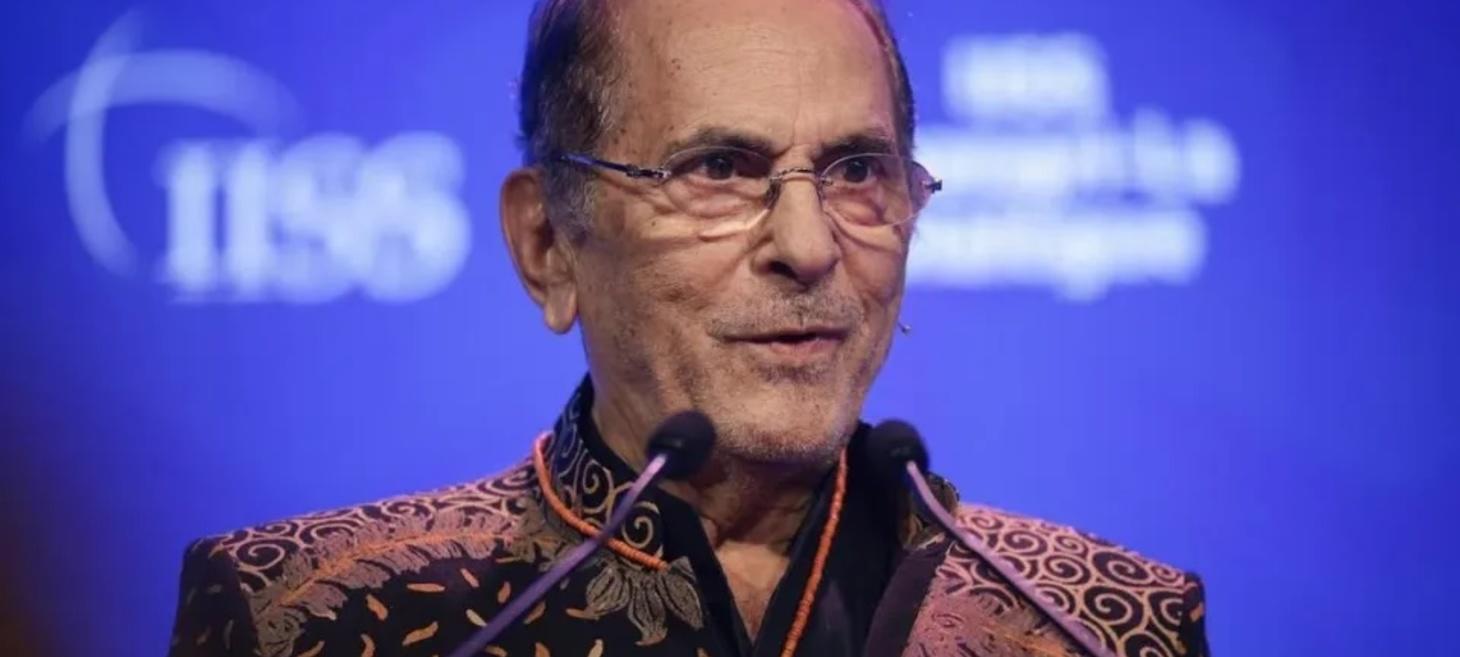
Timor-Leste’s leader floats idea of retired Southeast Asia general to guide Myanmar peace talks - Asia News Network
Timor-Leste President Jose Ramos-Horta, speaking at the Shangri-La Dialogue in Singapore on June 1, proposed that a retired Southeast Asian four-star general lead unconditional talks among Myanmar's Tatmadaw, ethnic armed groups, and the democratic opposition to seek a humanitarian solution. Ramos-Horta described Myanmar's civil war as "a stain on ASEAN's otherwise impressive catalogue of successes," while his country remains embroiled in a bilateral dispute with Myanmar after Naypyitaw expelled Timor-Leste's diplomatic mission head in February. The proposal echoes a similar 2025 suggestion by former Thai foreign minister Kasit Piromya, raising questions about whether ASEAN can find new momentum after years of stalled progress on its Five-Point Consensus peace plan.
asianews.network
Conflict
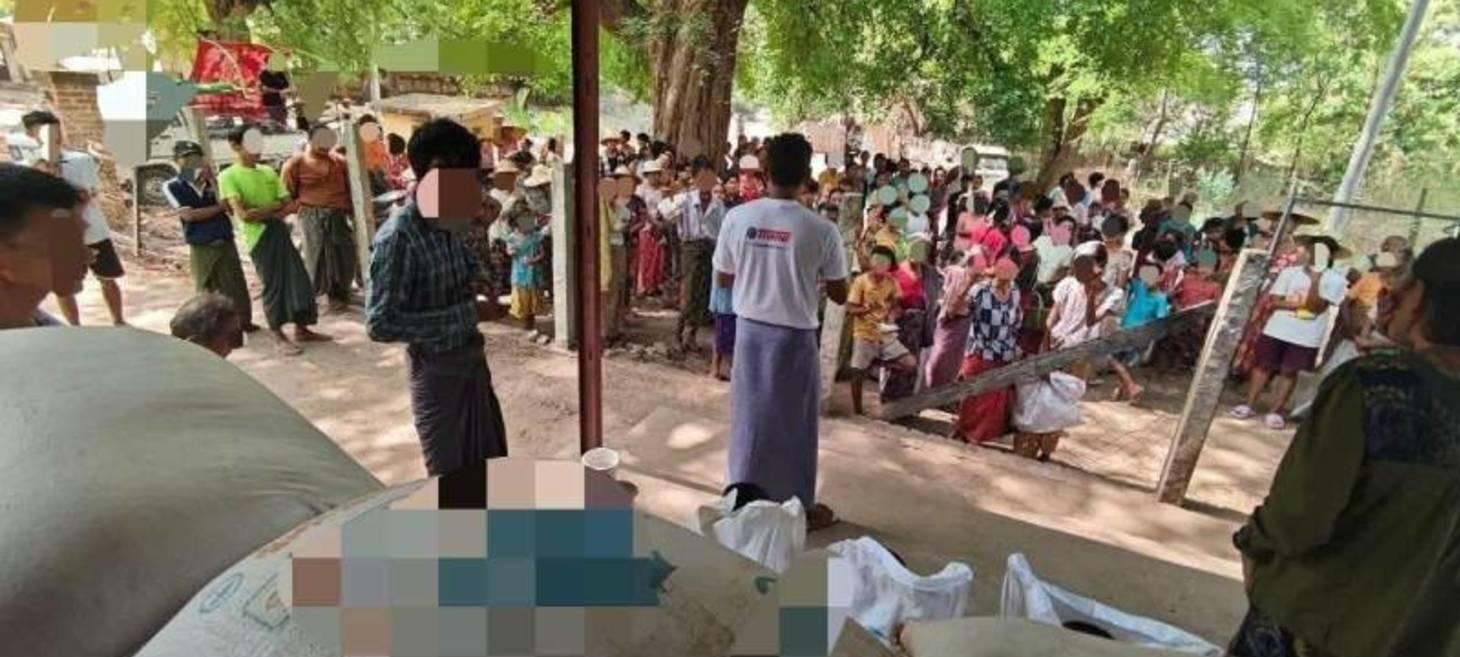
Over 20,000 Displaced People in Myit Chay in Need of Food and Shelter Assistance
More than 20,000 displaced people sheltering near Myitche town in Pakokku Township, Magway Region, urgently need food, rice, cooking oil, and shelter materials after the military junta launched ground offensives there from the second week of May. Junta forces have burned homes in Myitche and surrounding villages including Htanaungkone, Ywarthayay, and Phokone, killing at least ten civilians, while also blocking the supply of food, medicine, and goods to the wider area since May 14. The displaced population, previously estimated at around 20,000, continues to grow as residents whose homes have been destroyed flee to camps, raising questions about how long aid organizations can meet the escalating humanitarian needs.
mizzima.com
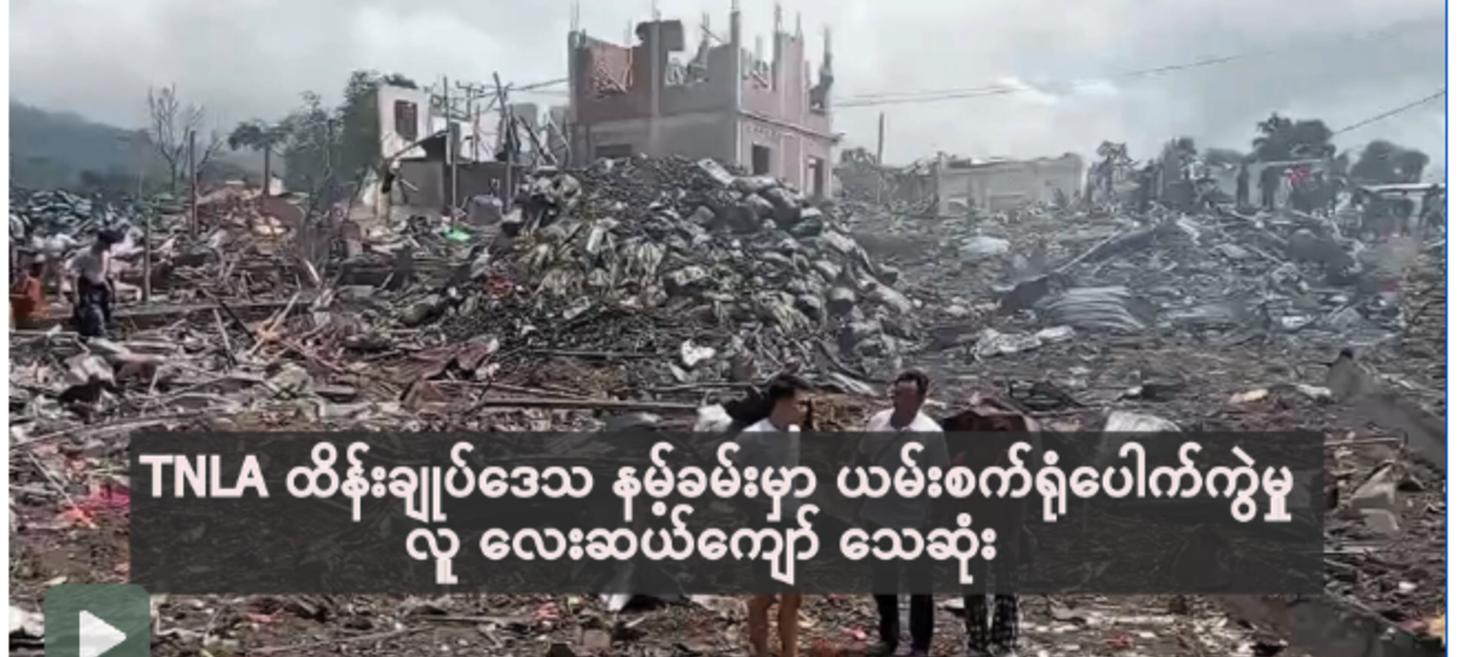
Explosion at Gunpowder Factory in Nam Kham, TNLA-Controlled Area, Kills Over Forty People
An explosion at a gunpowder factory in Kaung Tap village, Namhkam Township, northern Shan State — controlled by the Ta'ang National Liberation Army (TNLA) — killed more than 40 people and injured over 70 on May 31, according to locals and relief workers. The blast, which TNLA attributed to stored soft explosives intended for its mining operations, destroyed nearly the entire village and left some Chinese nationals among the casualties. Rescue teams are still searching for missing persons, and the death toll may rise; TNLA has promised an investigation and accountability but has not released official casualty figures.
rfa.org
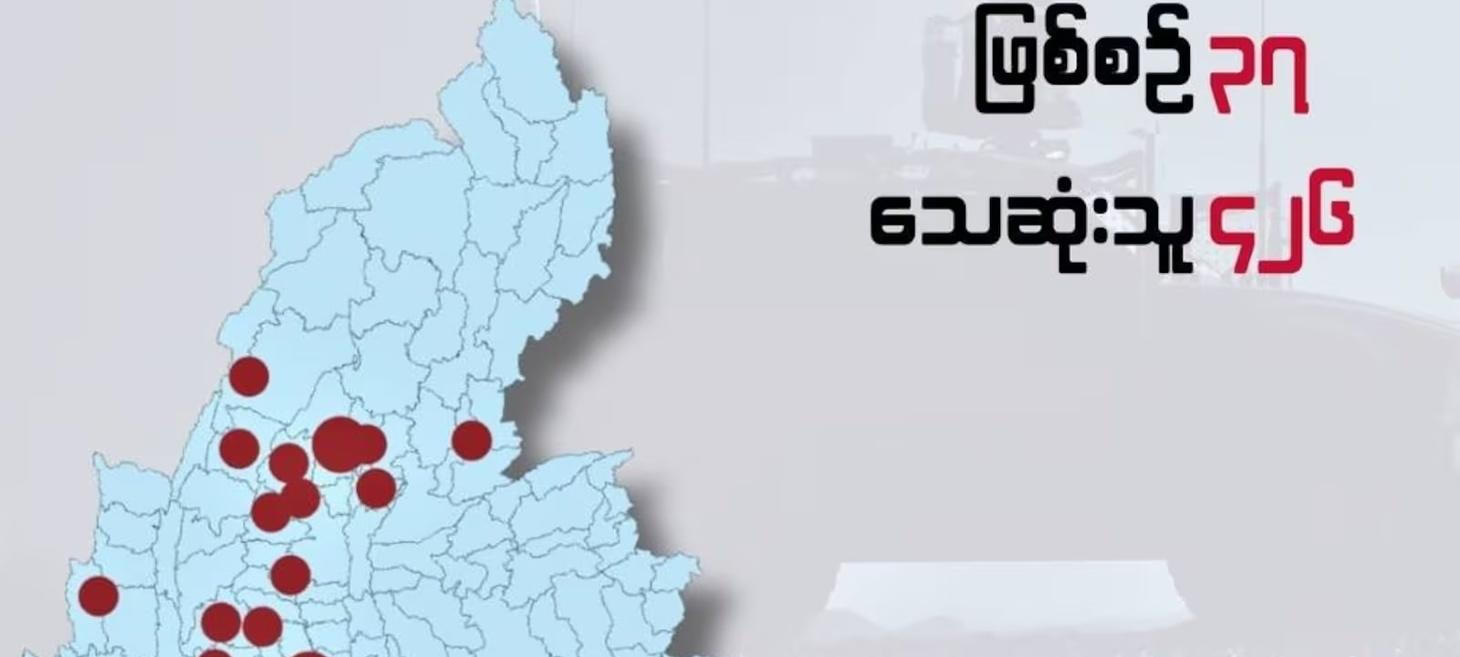
426 Killed in Mass Atrocities Within 3 Months Following Election
At least 426 civilians were killed across Myanmar in at least 37 mass-casualty incidents between January and March 2026, according to a May 27 report by research group Nyan Lynn Thit Analytica, during the three-month interval following the junta-organised election and before a military-appointed government was formed. Sagaing Region recorded the highest death toll at 201, followed by Magway Region with 55 and Kachin State with 53, with airstrikes accounting for 23 incidents and 250 deaths. The deadliest single attack occurred on March 20 in Katha Township, Sagaing, where up to 80 civilians died in an airstrike, raising questions about accountability during the transitional period.
rfa.org
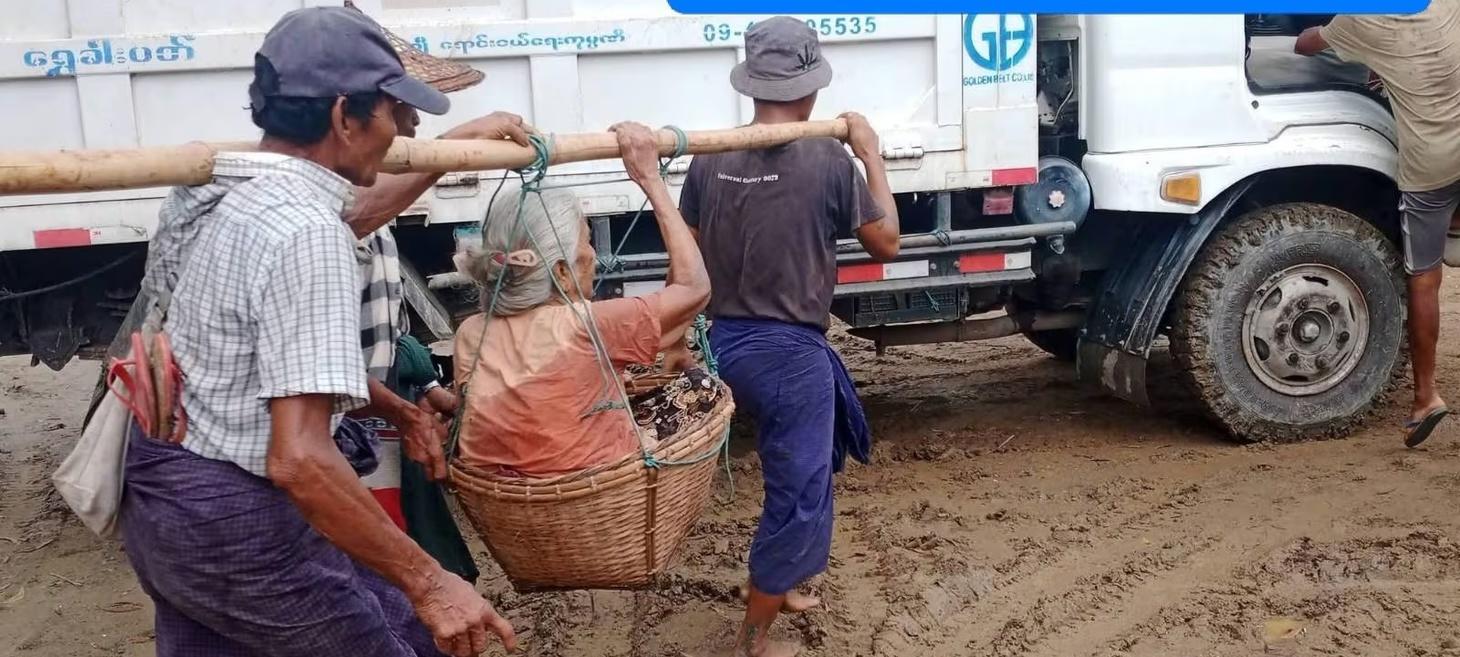
Kyaukphyu District's Sane Town Bombed Consecutively; Over 6,000 Locals Flee Homes
Myanmar's military has been conducting daily airstrikes and naval artillery bombardments on Sane town in Kyaukphyu Township, Rakhine State, forcing over 6,000 civilians from at least 14 villages and wards to flee their homes. Military vessels stationed at Kularma and Phayone islands, more than seven miles away, have been firing heavy weapons continuously while jet aircraft carried out three-hour bombing raids, killing two residents and wounding seven; a May 26 strike also killed 78-year-old U Maung Shwe Sin and destroyed 70 shops and 14 houses. With the rainy season approaching and roughly 50,000 people already displaced across Kyaukphyu, local aid workers warn that shelter and food supplies are critically needed.
rfa.org
Strategic Implications of Myanmar’s Offensive in Chin State
On May 19, 2026, Myanmar's Tatmadaw and the Zomi Revolutionary Army recaptured Tonzang, a strategically important town on the Tedim-Kale trade route in Chin State, following last month's recapture of Falam, the state's second-largest town. The offensive could next target Rihkawdar on the India-Myanmar border, with Chin State's position bordering India's Mizoram and Manipur states and Bangladesh's Chattogram Hill Tracts amplifying the conflict's regional significance. How the campaign unfolds may carry serious political and security implications for India and Bangladesh, given shared ethnic ties and volatile border dynamics.
thediplomat.com
What Happened at Htan Shauk Khan in Myanmar’s Rakhine State on May 2, 2024?
On May 2, 2024, at least 170 Rohingya Muslim civilians, including women and children, were reportedly killed in Htan Shauk Khan village in Buthidaung Township, northern Rakhine State, according to Human Rights Watch, which attributed the massacre to the Arakan Army. Village chief Mohammad Juloddin told The Diplomat that the morning began with Myanmar military shelling and airstrikes, followed by roughly 1,000 armed military personnel entering the settlement, while the AA broadcast loudspeaker announcements urging residents to flee. The original village of 914 inhabitants no longer exists, with survivors having established New Htan Shauk Khan about two miles north, as competing allegations between the AA and Myanmar military over responsibility remain unresolved.
thediplomat.com
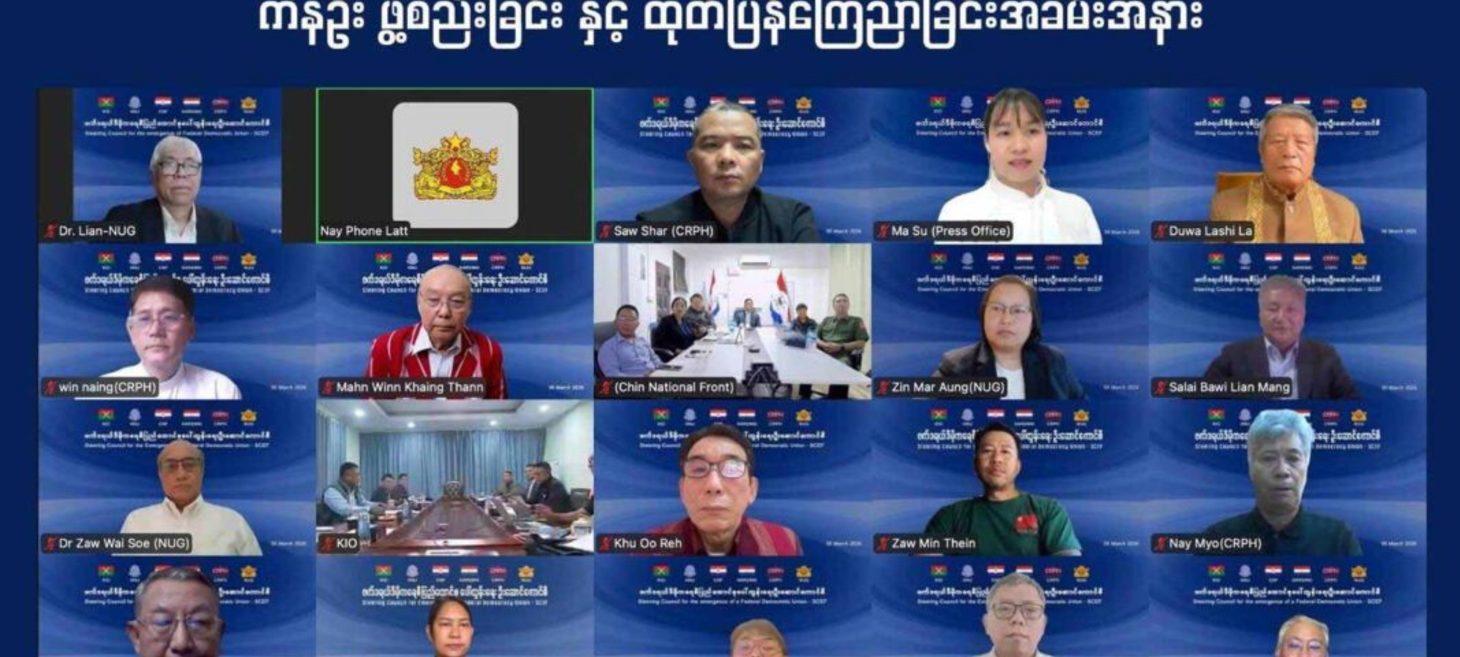
MYANMAR’S CIVIL WAR ESCALATION: SCEF Takes a Proactive Stance as the Military Clique Tries to Regain Lost Territory
Dr. Zaw Wai Soe, Coordinator of the SCEF Secretariat, announced in an interview with Khit Thit Media's "People to People" program that the Steering Council for the Emergence of a Federal Democratic Union has formed a Military Strategic Cooperation and Command Committee led by ten military leaders drawn from member organizations. The move comes as Myanmar's civil war intensifies and the military junta attempts to recapture territory lost to resistance forces.
shannews.org
Junta fighter jet flies low in apparent intimidation of RCSS chairman
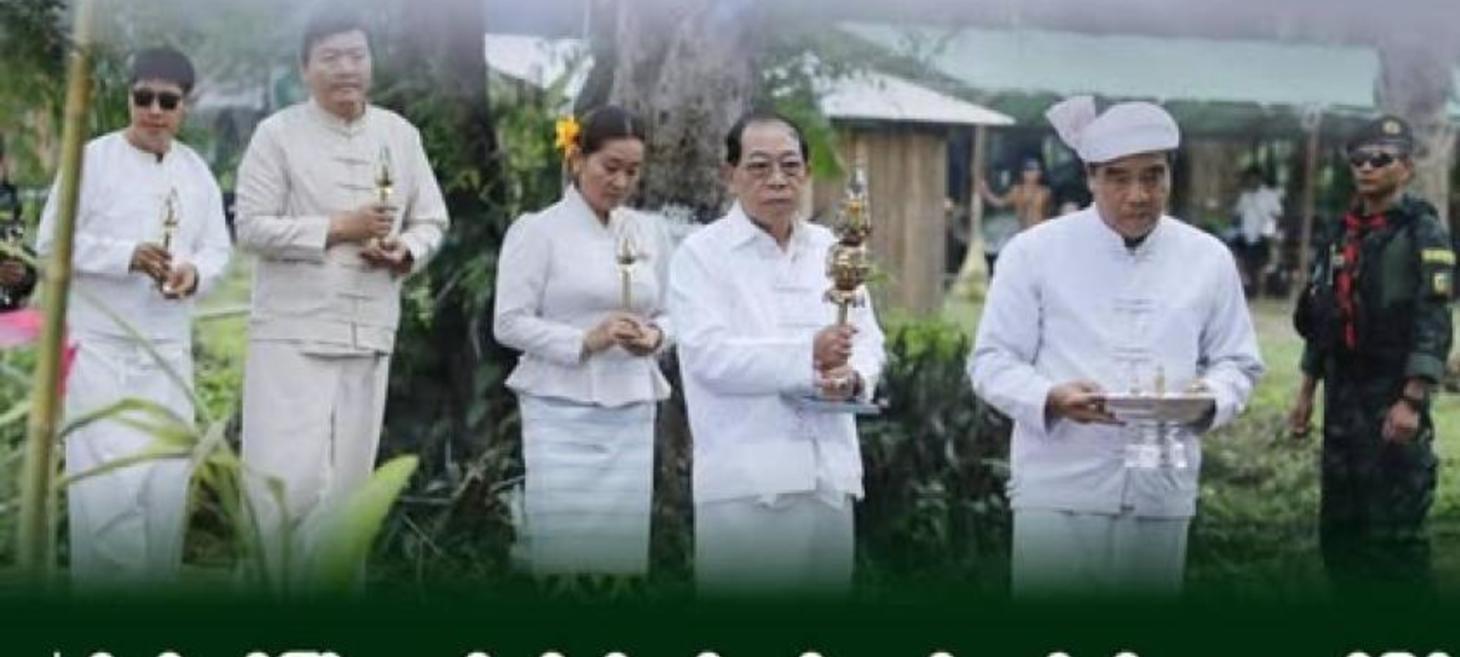
A junta fighter jet conducted six low-altitude flyovers on May 27 above Wannang Village in Namsang Township, Shan State, where Restoration Council of Shan State chairman General Yawd Serk was present, according to the RCSS's media outlet Tai Freedom. The military claimed the flight from Namsang Air Base was routine training, while General Yawd Serk described it as a provocative and threatening gesture, saying he refrained from responding out of respect for national-level peace agreements. The incident raises questions about the junta's sincerity in pursuing peace talks with ethnic armed organizations, which coup leader Min Aung Hlaing has called for within a 100-day window following his assumption of the presidency.
bnionline.net
Junta Forces in Sittwe Shell Pauktaw for Five Days
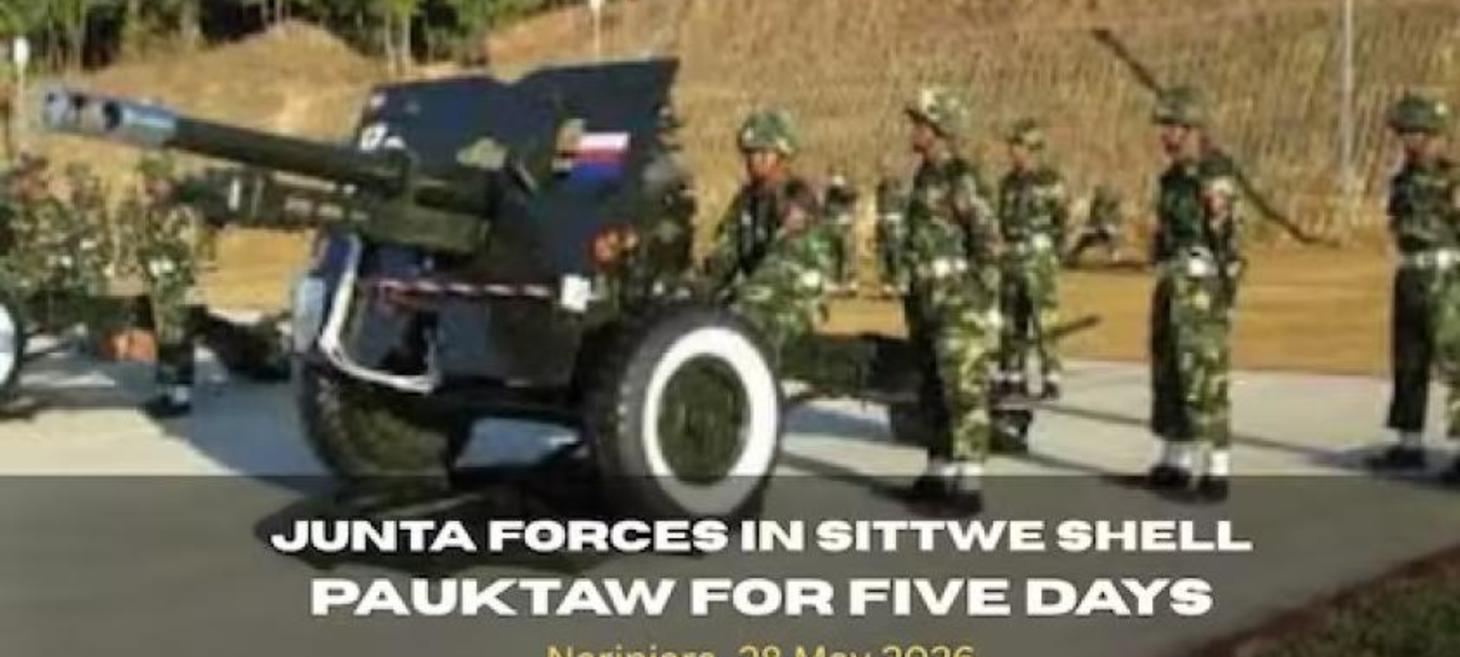
Junta forces based in Sittwe have shelled Arakan Army-controlled Pauktaw Township for approximately five days, targeting Thekhon village and Ngapre Kyunt across the Kaladan River. Police Battalion (12) and Navy units at the Shwe Min Gan and Point naval bases carried out continuous strikes between May 24 and May 28, including four artillery rounds fired at around 8:00 a.m. on May 28, following roughly 15 shells fired at Thekhon on May 21. Residents report smoke rising from the targeted areas and say the military routinely bombards civilian zones during escalations in the ongoing AA-junta fighting around Sittwe.
bnionline.net
Clashes erupt along route of Kachin State-bound junta convoy
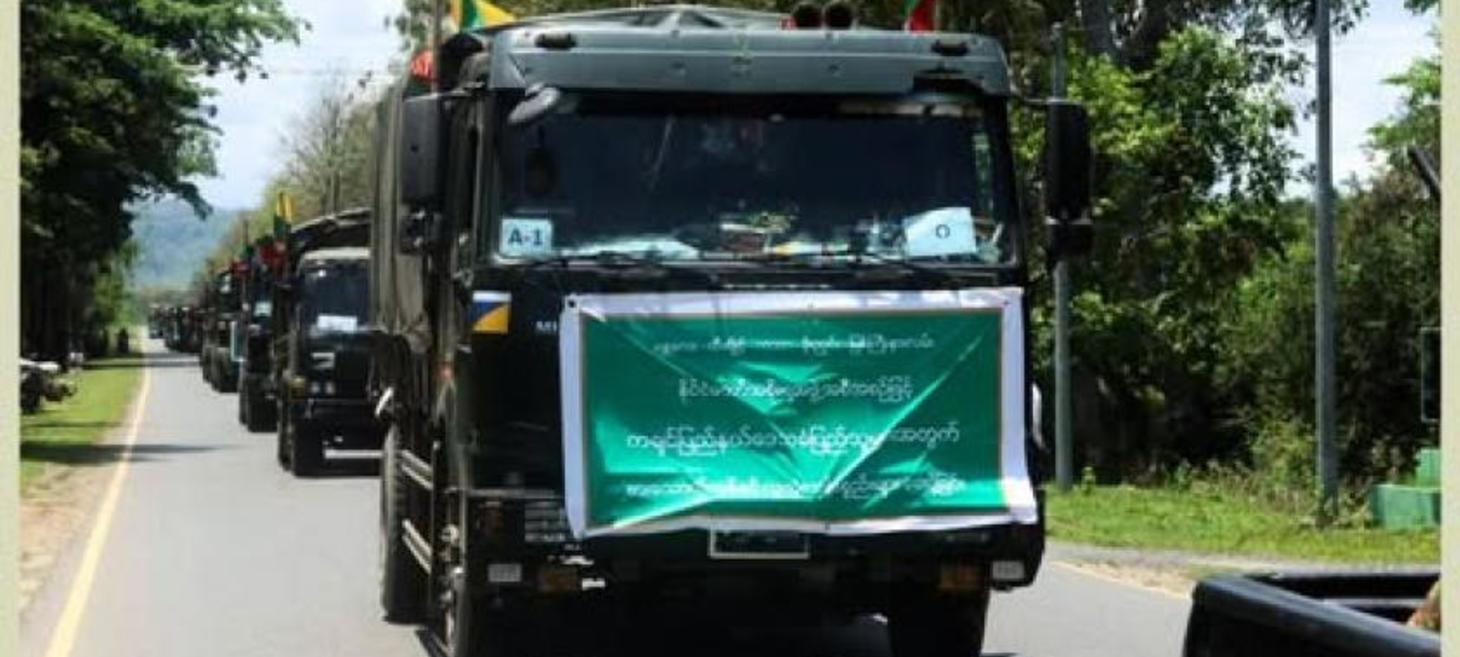
A junta convoy of around 300 vehicles, including two armored combat vehicles, departed Mandalay on May 22 and arrived in Myitkyina, the capital of Kachin State, on May 31, marking the second such large convoy sent to reinforce junta troops in the region. Resistance forces clashed with the convoy along its route, though fighters described the junta's strength as overwhelming, while locals also reported soldiers being left behind in towns and villages to establish positions. Security along the Mandalay–Myitkyina highway remains uncertain, with ongoing fighting around Katha, Indaw, Maw Luu, and Namseeawng raising questions about whether the route can remain reliably open.
bnionline.net
Conscription
APHR condemns Myanmar Junta’s forced conscription
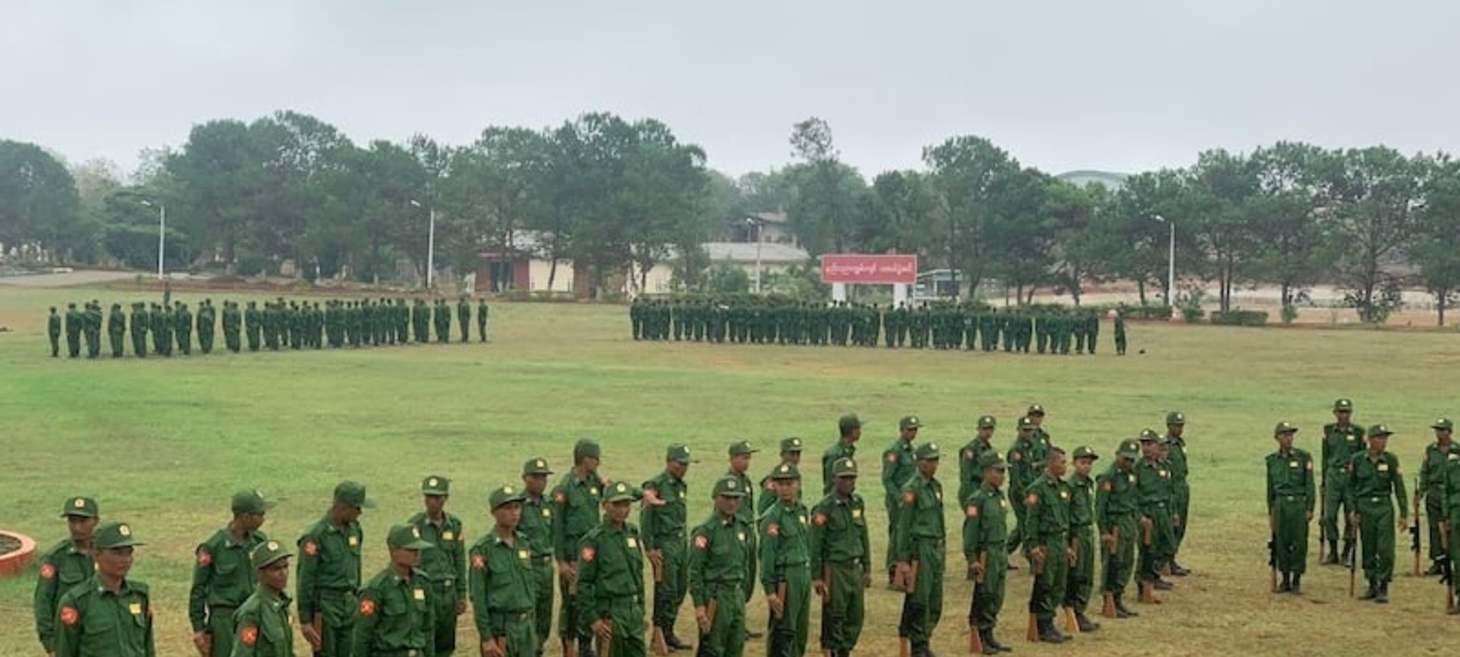
ASEAN Parliamentarians for Human Rights (APHR) condemned Myanmar's military junta on May 26 for forcibly conscripting up to 120,000 people since February 2024, with recruits reportedly deployed to frontlines with minimal training and used as human shields. The group also raised alarm over Thailand's forced return of more than 3,500 Myanmar nationals, some allegedly conscripted at gunpoint upon arrival, citing risks of refoulement and human trafficking. APHR is urging ASEAN members and the broader international community to halt deportations, hold the junta accountable, and secure the safe release of all conscripts.
mizzima.com
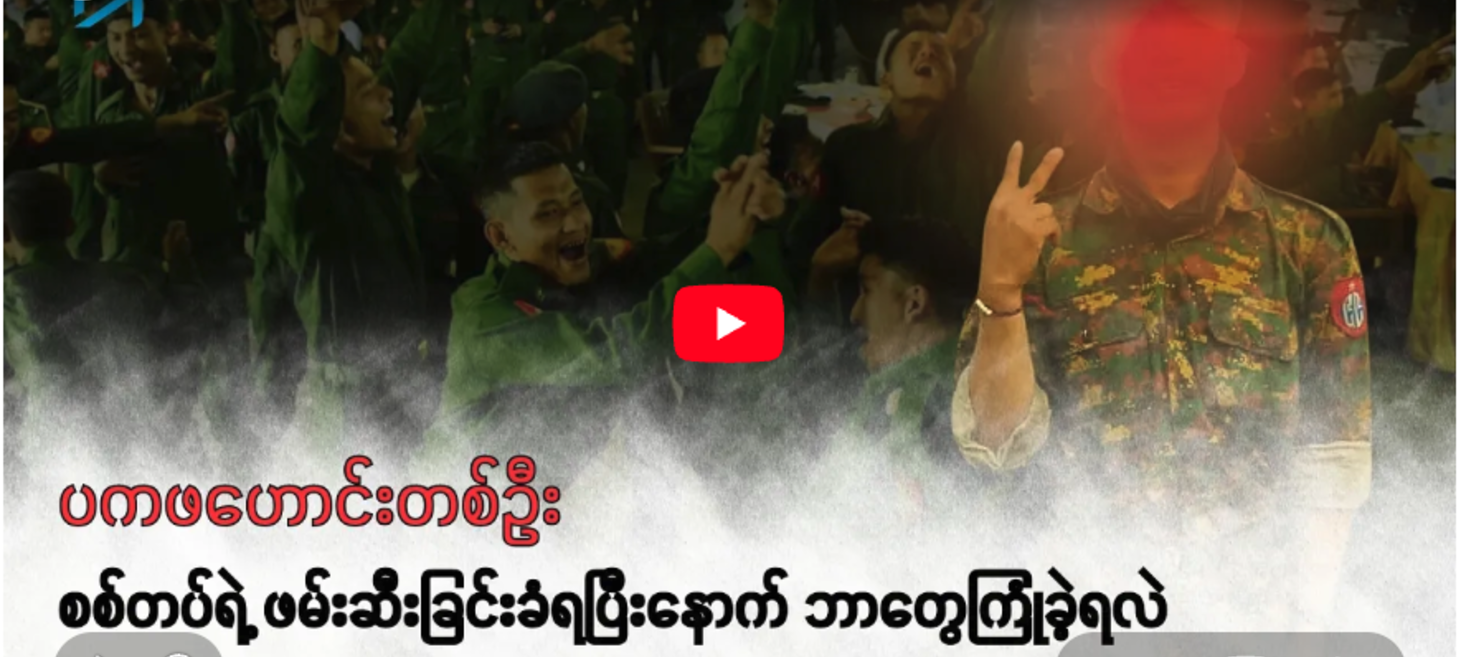
"In truth, it is us — the Pyusawhti [pro-military civilian militia] and the people conscripted as porters — who die at the very front."
Ko Thura Aung, 19, was forcibly conscripted by the Myanmar military after being detained while traveling from Ingone Township to Yangon, where he had hoped to find work abroad to support his family. He received minimal military training before being sent to the front lines, where conscripts were made to carry supplies at the front of columns without weapons, effectively serving as human shields. Ko Thura Aung eventually escaped by fleeing through a minefield surrounding the camp for over an hour, raising broader questions about the conditions facing forcibly conscripted soldiers across Myanmar.
myanmar-now.org
Economy
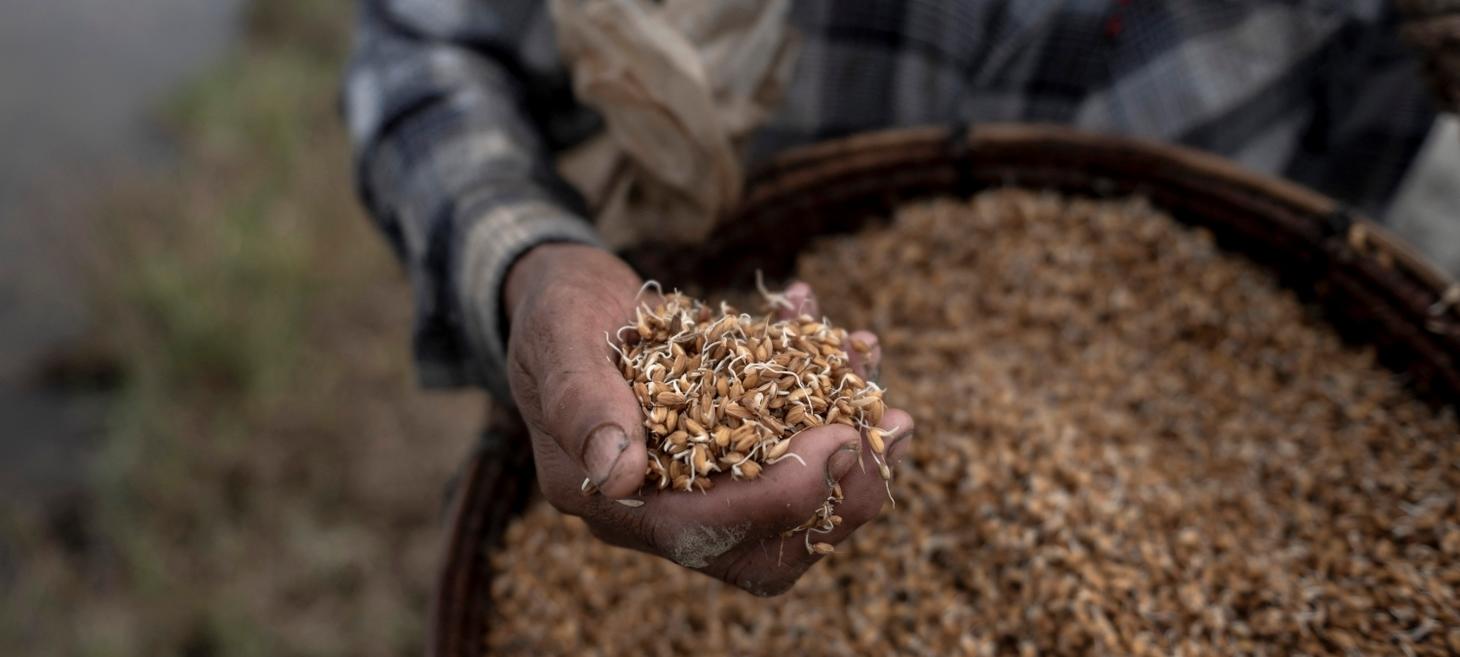
Growing fears: Myanmar farmers face fertiliser, fuel dearth
Myanmar farmers are facing severe shortages of fertiliser and fuel, deepening a crisis in the country's key agriculture sector. The ongoing stand-off at the Strait of Hormuz has compounded supply disruptions, tightening access to essential agricultural inputs. Whether Myanmar can stabilise food production amid these converging pressures remains an open question for the country's rural economy.
myanmar-now.org
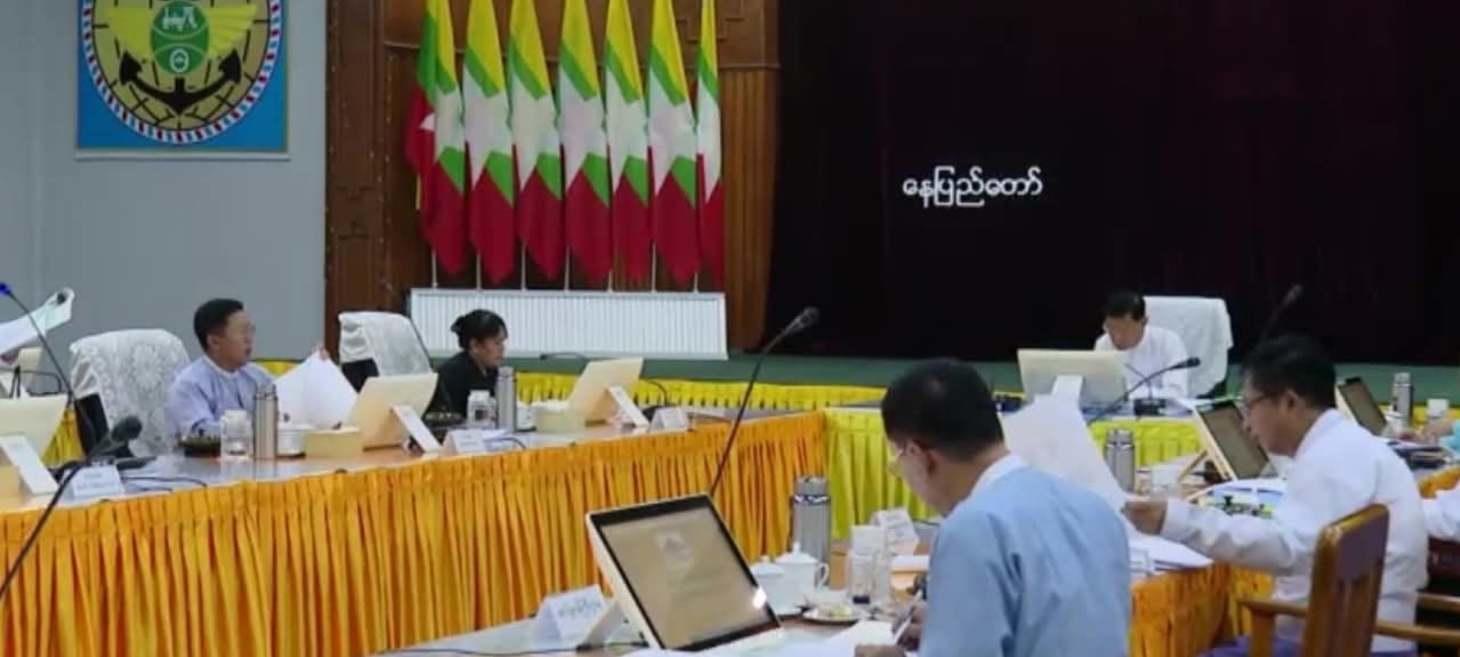
Myanmar junta approves 12 new investment projects as it seeks to project economic stability
Myanmar's military junta has approved 12 new investment projects worth tens of millions of dollars across manufacturing, energy, and services sectors, with the Myanmar Investment Commission granting approval at its latest meeting in Naypyidaw. State media framed the move as evidence of economic confidence, with officials citing potential job creation and increased industrial output from both domestic and foreign investors. The approvals come as many multinationals have withdrawn from the country citing instability and human rights concerns, and ongoing conflict continues to disrupt supply chains, currency stability, and transportation networks.
mizzima.com

Myanmar car owners to be allowed to buy EV imports in exchange for old vehicles
Myanmar's military government plans to allow car owners to import electric vehicles in exchange for surrendering their old vehicles, as part of a push to reduce the country's dependence on imported oil, which currently accounts for 90 percent of its supply. The scheme is intended to accelerate EV adoption while addressing fuel import costs that strain the economy. It remains unclear how the exchange program will be structured, what vehicles will qualify, or when it will take effect.
myanmar-now.org
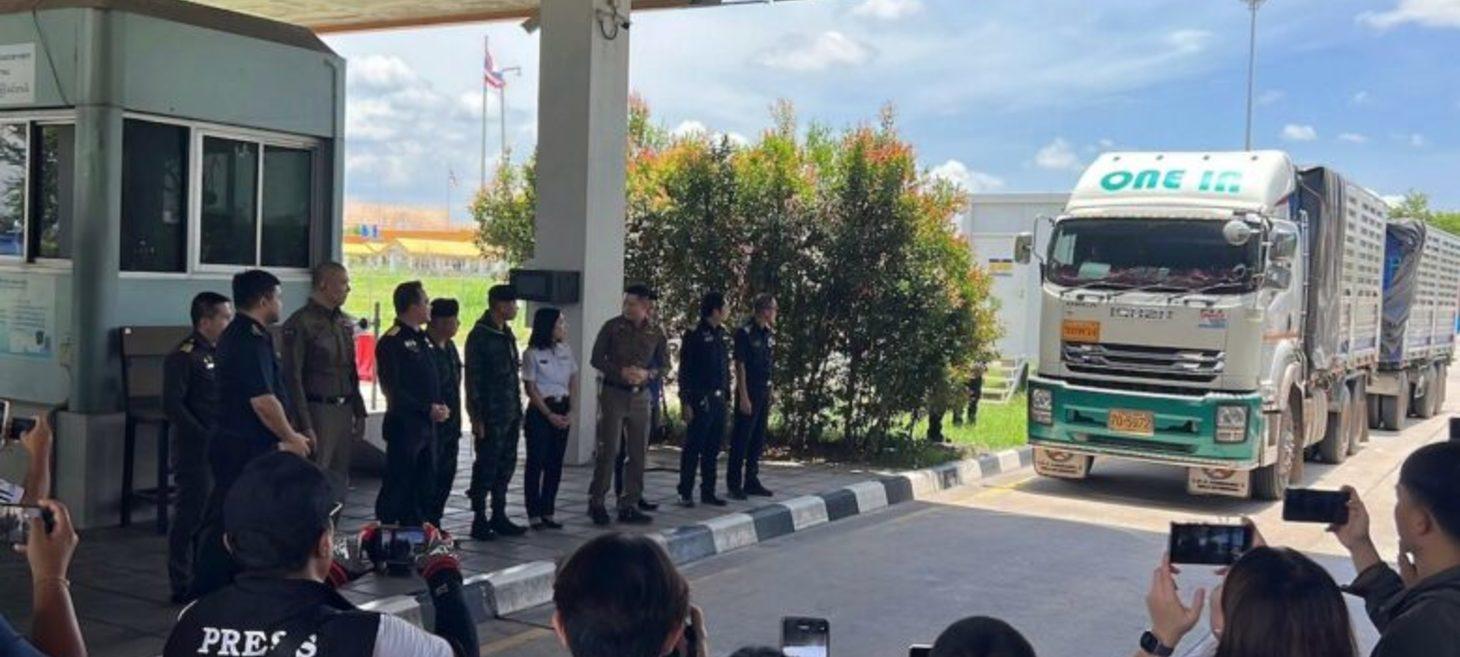
Myawaddy–Mae Sot Friendship Bridge No. 2 reopens, limited truck traffic resumes into Myanmar
The Myawaddy–Mae Sot Friendship Bridge No. 2 partially reopened on May 28, with Thai trucks beginning to cross into Myanmar on a trial basis twice daily — morning and evening. Thailand confirmed the limited resumption, while Myanmar issued no public statement and locals in Myawaddy reported receiving no prior official notification. The bridge, a critical border-trade artery closed since August 2025 due to nearby fighting, has not fully reopened as bilateral negotiations on remaining details continue.
karennews.org
Foreign Affairs
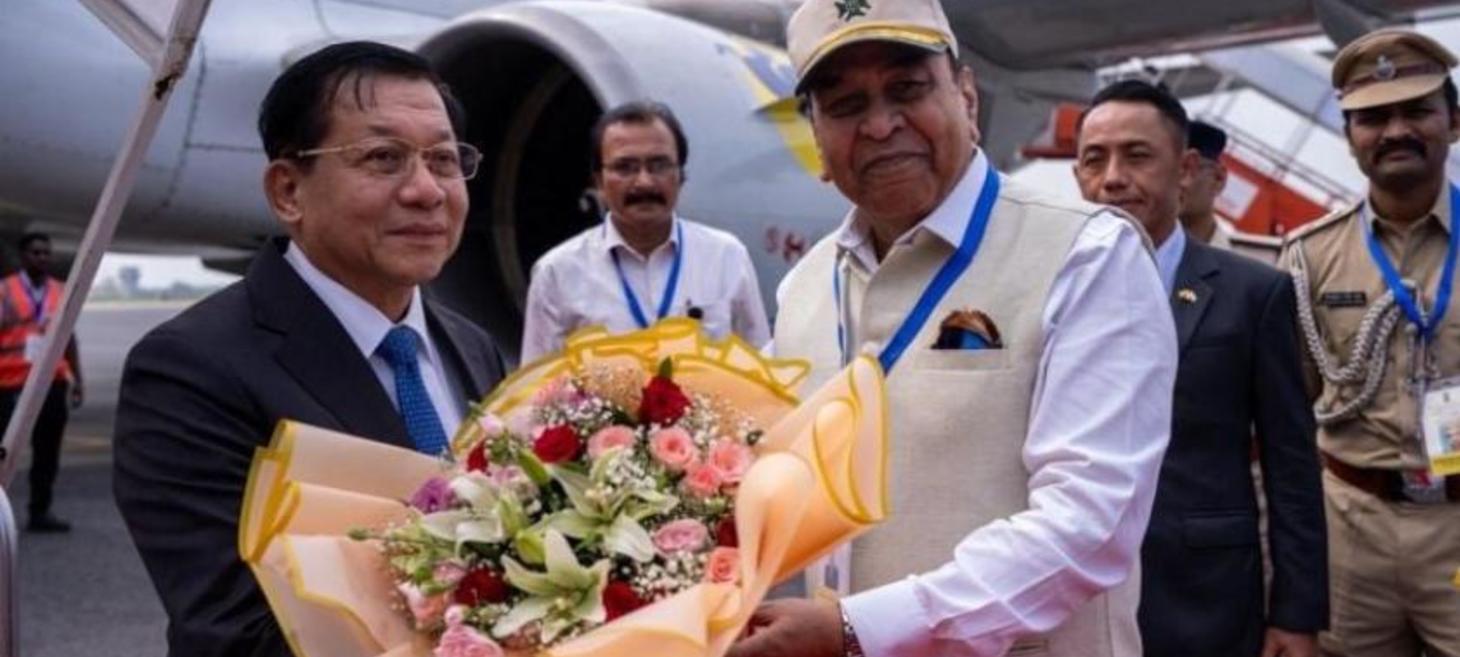
India faces sharp backlash from Myanmar resistance over Min Aung Hlaing visit - Burma News International
India is hosting Myanmar military chief-turned-president Min Aung Hlaing for a five-day state visit initiated by Prime Minister Narendra Modi, marking Min Aung Hlaing's first official foreign trip since assuming the presidency following a controlled parliamentary transition in April. New Delhi has framed the visit around its "Neighborhood First" policy, with bilateral talks expected to focus on border stability, trade routes, and maritime connectivity along the shared 1,600-kilometre frontier. Myanmar's pro-democracy forces, resistance groups, and human rights organizations have sharply condemned the visit, arguing it legitimizes a regime conducting daily airstrikes and cluster bombings against its own population while much of the international community continues to isolate the junta.
bnionline.net
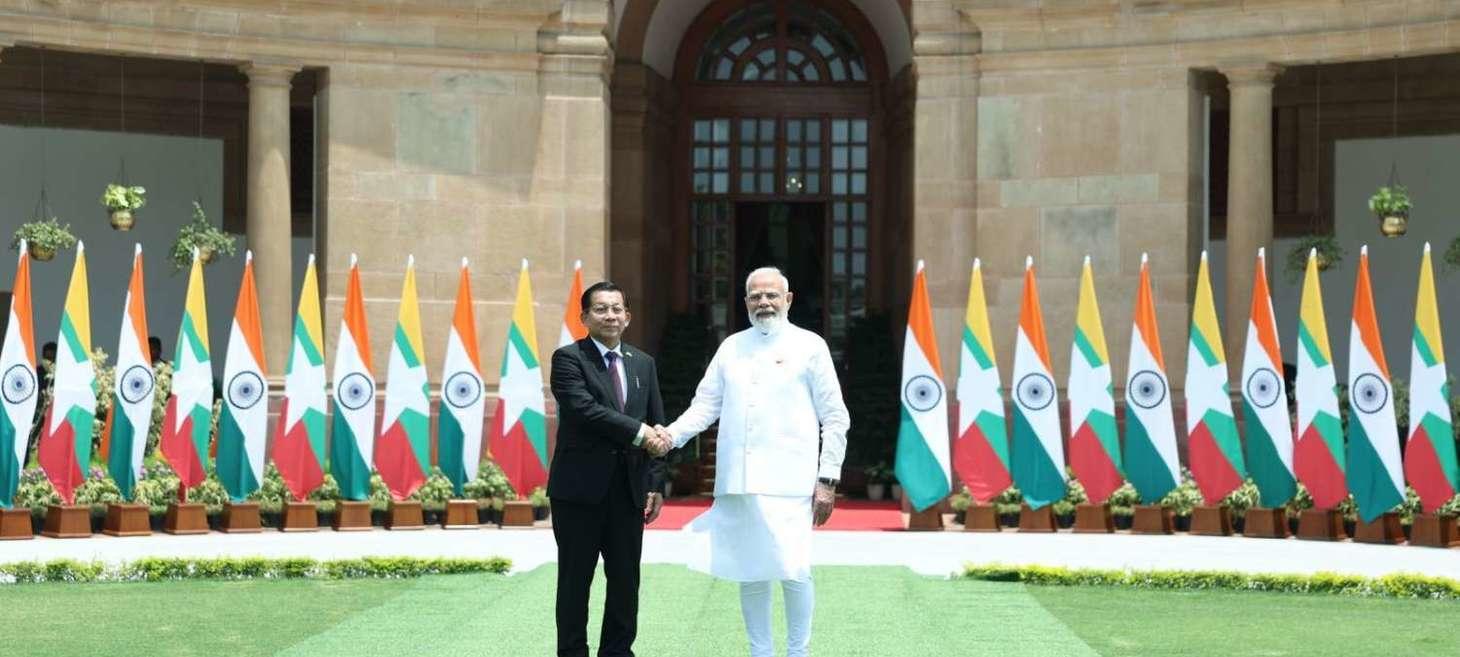
Rare Earth Minerals and Project Agreements Reached During Coup Leader's India Trip
Myanmar junta chief Min Aung Hlaing met Indian Prime Minister Narendra Modi in New Delhi on June 1, agreeing to cooperate on rare earth mining, trade, maritime security, and cyber security, according to statements from both sides. The five-day visit, which began May 30 with a stop at Bodh Gaya in Bihar state, is Min Aung Hlaing's first overseas trip since becoming president following a disputed election. Indian authorities blocked and briefly detained two activists on May 30 who had planned protests near Jantar Mantar and the Myanmar embassy, while the National Unity Government filed a formal objection with India's foreign ministry.
myanmar-now.org
Foreign Investment
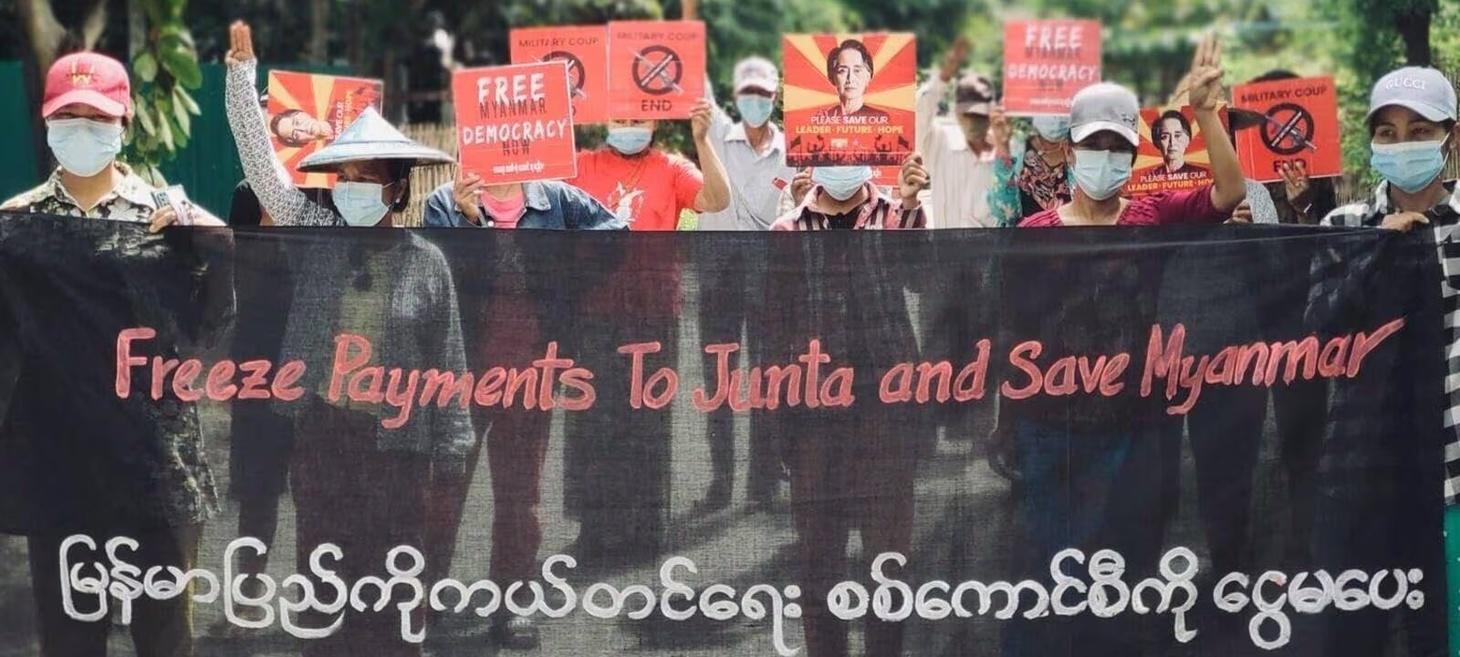
Civil Society Groups File Complaint with Thai Human Rights Commission Seeking Investigation of Three Companies
Civil society groups filed a formal complaint with the Thai National Human Rights Commission on May 25, urging it to investigate three energy companies — state-owned PTT and PTTEP, and private firm Northern Gulf Petroleum — over their continued operations in Myanmar. The groups, including the Blood Money Campaign and Campaign for a New Myanmar, allege that revenue from offshore oil and gas projects funds the military junta's human rights abuses, including airstrikes and mass killings of civilians. The complaint also calls for escrow mechanisms to prevent junta access to energy revenues and urges Thailand to enforce UN and OECD business and human rights guidelines against the firms.
rfa.org
Governance & Rule of Law
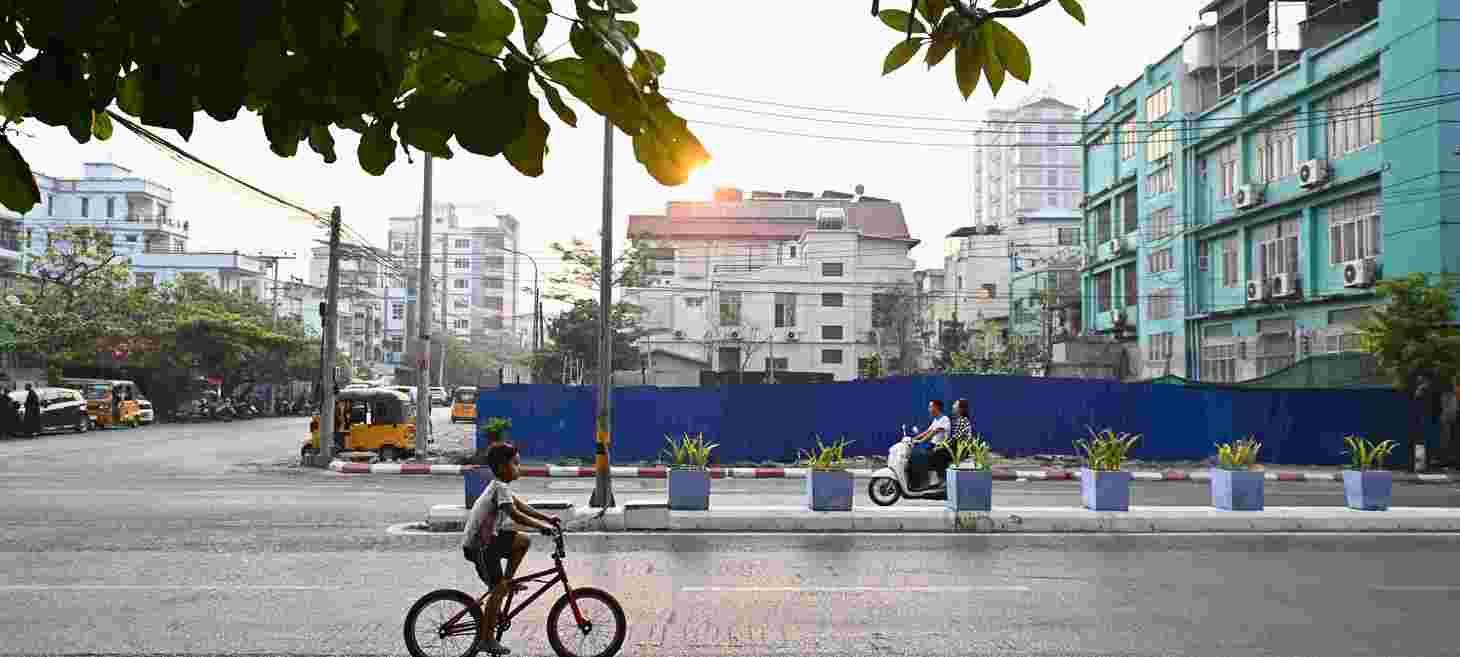
172 Residential Shophouses Around Football Stadium Forcibly Evicted in Mandalay
Myanmar's military has ordered the forced eviction of 172 residential and commercial shop units surrounding the Maha Aung Myay sports ground in Mandalay, with soldiers and police present at the site from May 28 to enforce the clearance. The units, located in Deikhon East ward near the Maha Aung Myay gemstone market, were originally purchased under 30-year land grants from the Ministry of Sports during the Than Shwe era, and authorities have posted red banners reading "do not encroach on government land." Whether residents whose grants have not yet expired will receive any compensation or legal recourse remains unclear.
myanmar-now.org

Kim Aris, son of imprisoned Burmese opposition leader Aung San Suu Kyi: ‘The world seems to have forgotten her’ - EL PAÍS English
Kim Aris, son of detained Myanmar opposition leader Aung San Suu Kyi, has warned that the world appears to have forgotten his mother, who remains imprisoned following the military coup that ousted her government in February 2021. Suu Kyi, now in her late 70s, has been held in junta custody and sentenced to decades in prison on charges widely condemned by international observers as politically motivated. Her son's remarks raise urgent questions about whether sustained global attention and diplomatic pressure on Myanmar's military rulers can be revived.
elpais.com
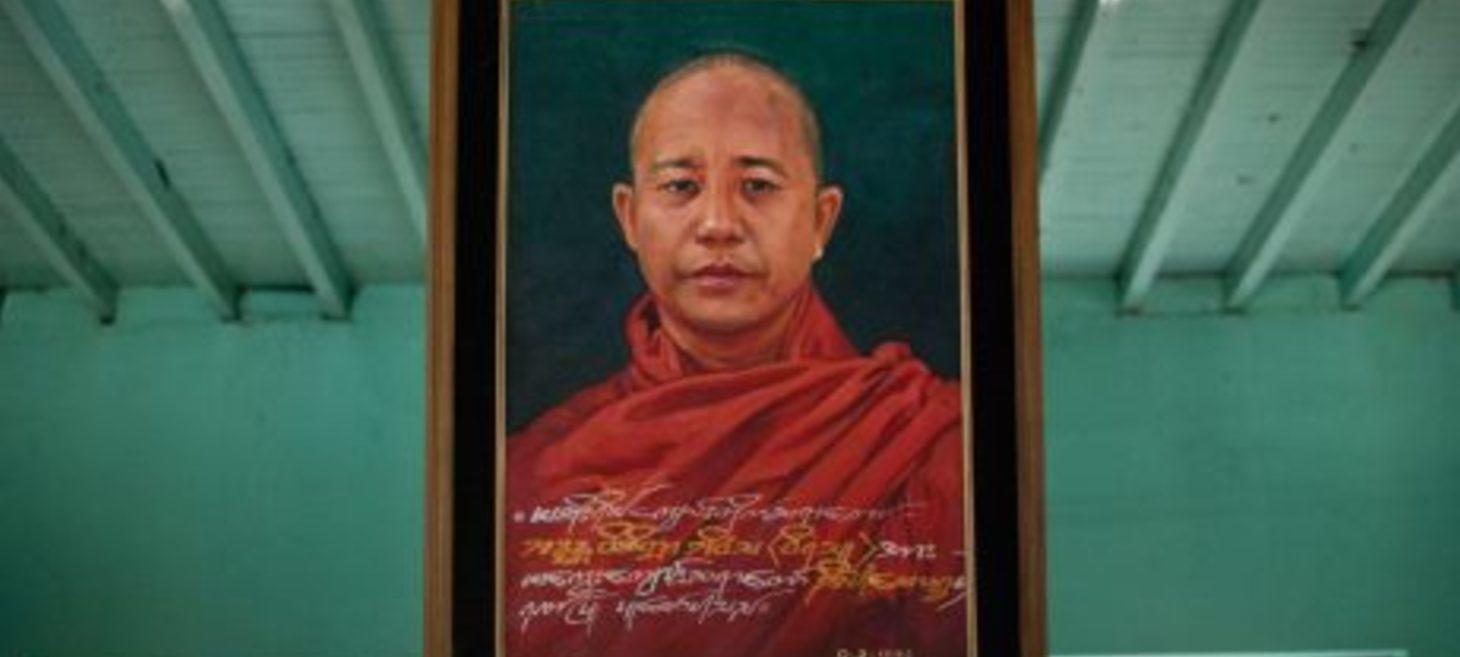
Unholy Violence: Weaponizing Religion Against Gender Rights Defenders in Myanmar - The Diplomat – Asia-Pacific
Asia Centre's report "Religious Fundamentalism in Myanmar: Post-Coup Repression of Gender Rights" documents how Buddhist fundamentalism operates as an integral component of military authoritarianism rather than a parallel force, with the junta weaponizing legislation, physical violence, and online harassment to suppress women's, gender, and sexual minority rights defenders. The February 2026 election endorsement by Ma Ba Tha founder Ashin Wirathu illustrates the alliance, rooted in Burmanization and Buddhization policies dating to the 1960s. Whether WGSM organizations' countermeasures — including encrypted communications, cross-border partnerships, and engagement with the National Unity Government — can sustain advocacy amid intensifying AI-enabled surveillance remains an open question.
thediplomat.com
Sanctions

JFM welcomes the resignation of Myanmar junta crony as Iceland’s Honorary Consul to Myanmar
Justice For Myanmar (JFM) has welcomed the resignation of Ko Ko Latt as Iceland's Honorary Consul to Myanmar, with the Icelandic Foreign Ministry confirming the post was formally withdrawn effective 15 May after Ko Ko Latt spent eleven weeks in the role. The resignation followed a review launched by Iceland's Ministry for Foreign Affairs after JFM wrote to Foreign Minister Þorgerður Katrín Gunnarsdóttir on March 27 detailing Ko Ko Latt's alleged business ties to EU-sanctioned junta entities Myanma Timber Enterprise and Myanma Economic Holdings Limited. JFM also published a report it says contradicts Ko Ko Latt's denials of those business dealings using his own company documents, junta agency records, and social media accounts.
mizzima.com
Telecommunications
Report says digital platforms failed Myanmar independent media during junta elections
A Human Rights Myanmar report released in May, produced with the Institute for Press and Communication Management, found that major digital platforms including Facebook, YouTube, and TikTok failed to protect exile-based independent media during the junta's elections held between December 2025 and January 2026. The report found that 91% of surveyed outlets experienced digital attacks during the electoral period, 76% had journalistic photographs deleted by automated moderation, and half received no platform monetisation revenue due to corporate registration barriers. The findings raise questions about whether tech companies will reform content moderation and monetisation policies to distinguish legitimate conflict reporting from propaganda in Myanmar's ongoing civil war.
mizzima.com
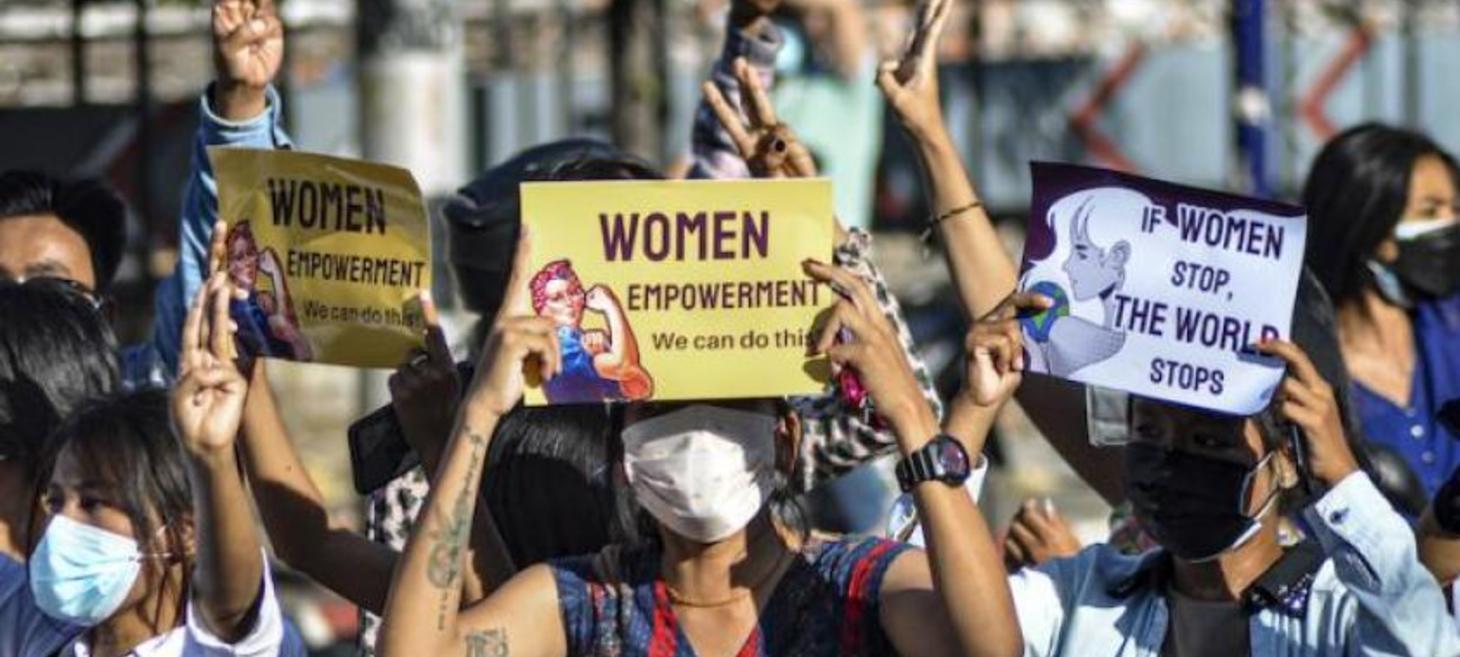
Over 100 women arrested under Myanmar military junta’s digital repression ecosystem
The Myanmar Internet Project's report, "The Military Junta's Digital Repression Ecosystem," documents 374 people arrested for online expression between February 2022 and July 2024, including 114 women. The junta has escalated digital repression through internet shutdowns, surveillance technology, and restrictive laws that force citizens into widespread self-censorship and compel people in areas like Thandwe to travel over 10 miles or hike two hours up a mountain to access phone signals. The report raises urgent questions about how the communications blackout disproportionately endangers women, exposing them to increased violence and gender-based discrimination.
bnionline.net