Introduction & Analysis
This collection of open-source English-language news articles published over the past week highlights significant events and issues concerning Myanmar. They present a snapshot of the country's safety and security landscape.
- The Myanmar junta is proceeding with phased elections starting in late December despite international condemnation that the vote is a "sham" designed to legitimize military rule, and is simultaneously using draconian laws to persecute critics, arresting and handing down lengthy jail sentences to citizens and artists who oppose the poll.
- The conflict includes escalating violence against civilians, such as catastrophic airstrikes on non-military targets like the Mrauk-U Public Hospital, which killed dozens of people, while resistance forces are forming new coalitions like the Spring Revolution Alliance to coordinate operations. However, they face severe challenges, including weapon shortages resulting from Chinese pressure on ethnic armed organizations.
- Myanmar authorities have undertaken high-profile crackdowns on Chinese-led telecom fraud and online gambling operations, repatriating over 70,000 foreign nationals and demolishing scam centers in areas like KK Park, even while the junta and China have warned against foreign intervention (specifically US involvement). Critics continue to allege that the military and allied militias were complicit in protecting these billion-dollar scam syndicates.
- The nation also faces significant socio-economic strain, as seen in the increased tax burdens imposed by groups like the MNDAA on businesses in Shan State and severe transport delays caused by junta-enforced checkpoints, compounded by a U.S. visa ban that cites administrative factors but effectively halts educational opportunities for young people fleeing the civil war.

Conflict
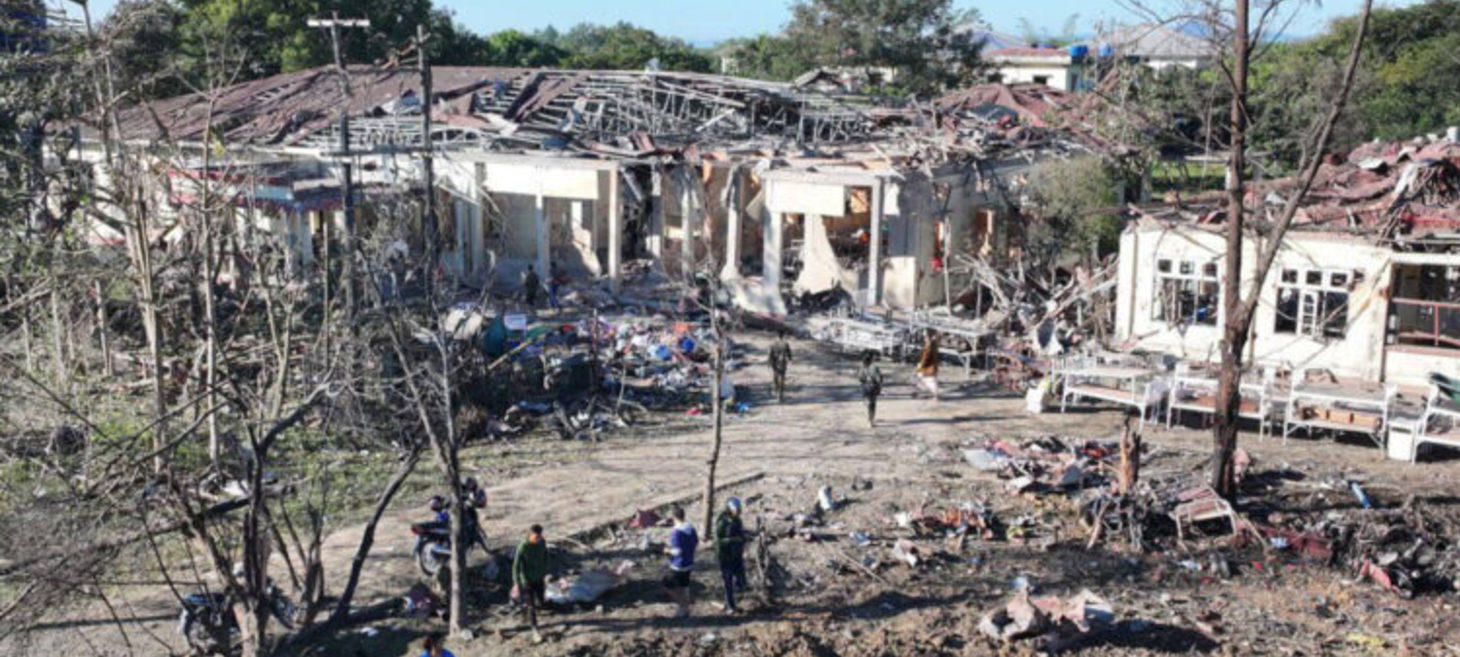
Myanmar Junta Continues Rakhine Airstrikes After Hospital Massacre
Despite international condemnation over a deadly airstrike on a public hospital that killed over 30 people, the Myanmar Junta has carried out a new series of airstrikes and shelling, using fighter jets and cluster munitions against civilian targets in Rakhine State. The United Nations and international organizations condemned the hospital attack, which injured over 70 patients and killed staff, calling for an investigation into what they said could constitute a war crime. However, the junta claimed the facility was an Arakan Army (AA) military base. The AA, which called the attack an "extremely vile and cowardly war crime," is currently expanding its offensive and attempting to seize control of key locations like Kyaukphyu and the state capital Sittwe.
irrawaddy.com
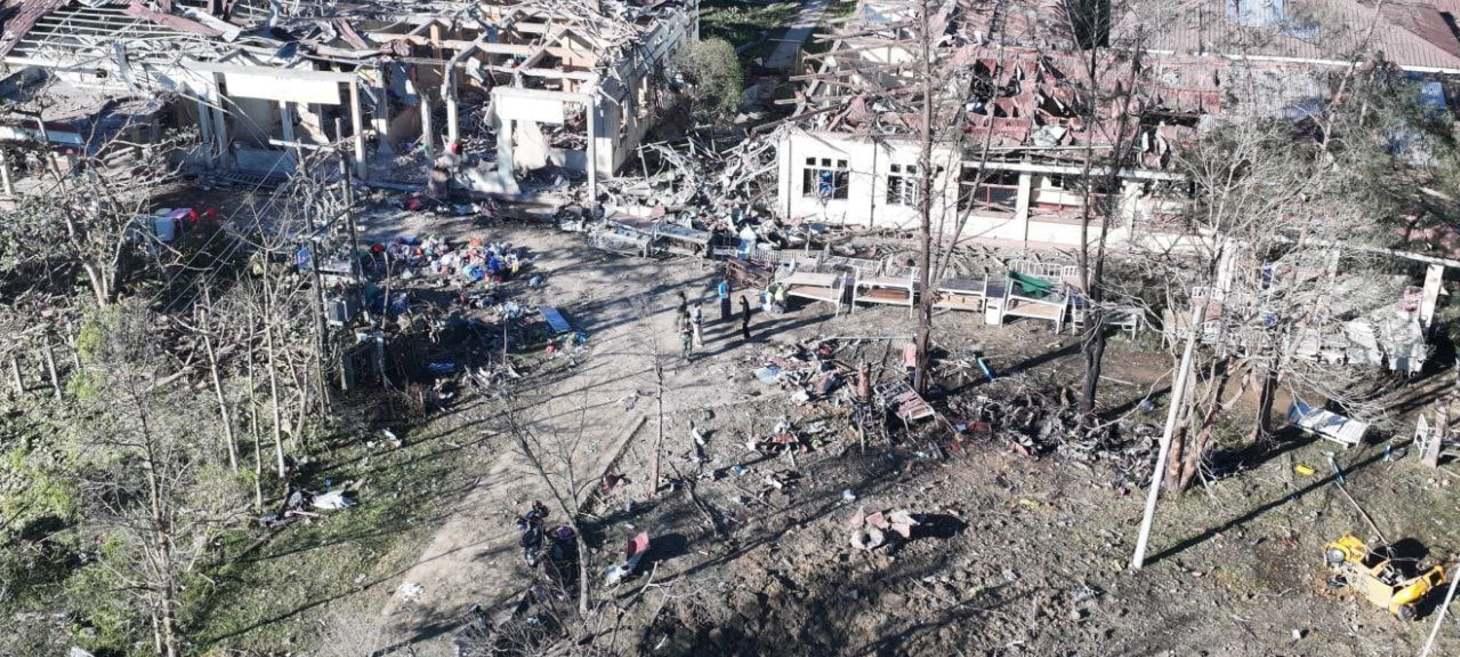
SAC-M says violence against civilians by Myanmar junta escalating as sham elections near
The Special Advisory Council-Myanmar (SAC-M) called out the Myanmar junta for its escalating campaign of violence against civilians ahead of "sham elections" slated for late December 2025. This violence involves accelerated, deadly aerial assaults—such as bombings targeting a public hospital in Mrauk-U and a teashop in Depayin—which SAC-M views as a clear pattern of collective punishment and "gerrymandering through atrocities" intended to manipulate electoral turnout. Consequently, SAC-M urged the international community, including ASEAN and the UN Security Council, to reject the elections, block the junta's access to weapons and cash, and formally increase support for Myanmar's legitimate democratic actors.
mizzima.com
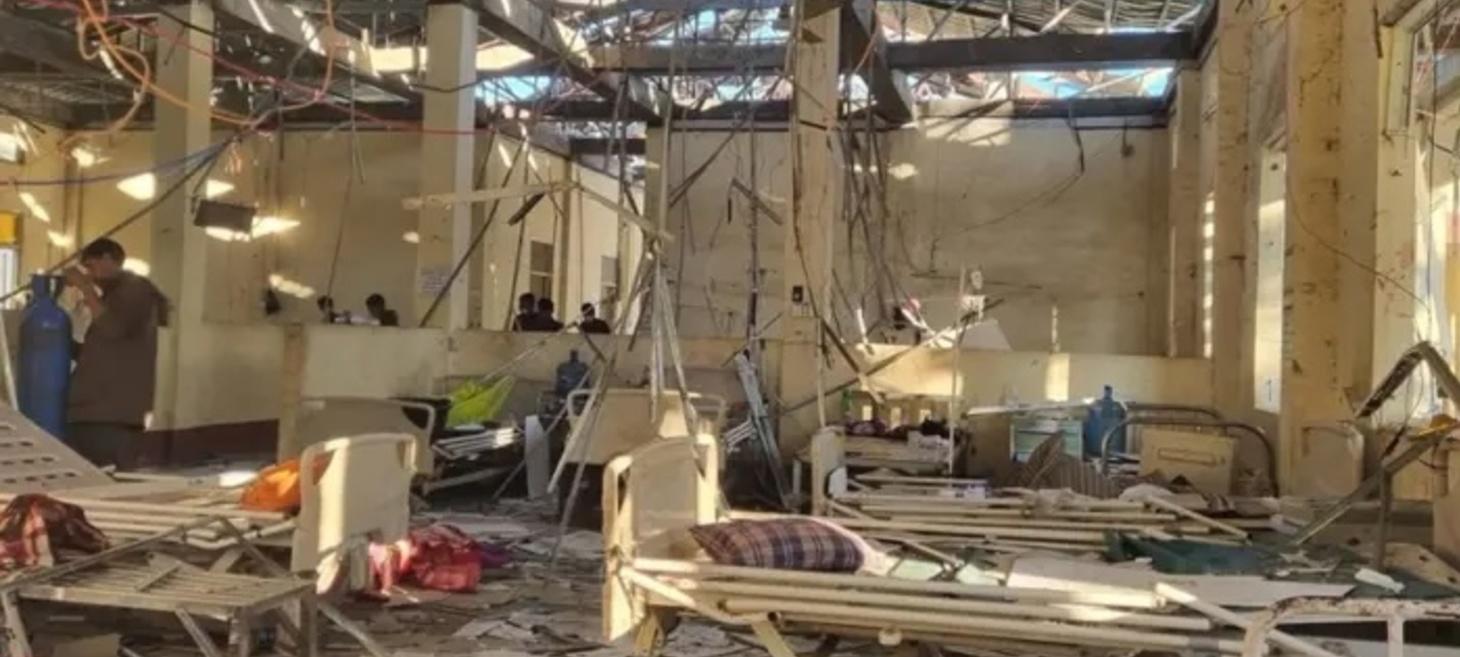
UN condemns airstrike on Myanmar hospital, warns of 'soaring' humanitarian needs
The UN has condemned a recent airstrike on a hospital in Myanmar's Rakhine State, which reportedly killed at least 33 civilians and injured over 70 individuals, including patients and medical staff. UN spokesperson Farhan Haq noted that this strike, which the World Health Organisation verified as the 67th attack on health in Myanmar this year, is part of a broader pattern of harm to civilians, emphasizing that medical facilities must be respected and protected under international law. Due to the ongoing violence, which escalated following the 2021 military coup and has displaced millions, humanitarian needs are "soaring," leading the 2026 Humanitarian Needs and Response Plan to call for US$890 million to assist 16.2 million people.
thestar.com.my

Myanmar military closes in on Singu
The Myanmar military is intensifying its advance on the resistance-held town of Singu, north of Mandalay, using a multipronged tactical approach that includes ground assaults, shelling, and significant drone and heavy artillery strikes, forcing resistance forces to fall back steadily. Following the fighting that erupted on December 6, junta forces seized villages like Ta Yaw Pin and Shwe Pyi along the Mandalay-Myitkyina road, advancing to within ten miles of Singu's urban center. Singu is now at high risk of being lost, as the Mandalay Region People’s Defence Forces (MDY-PDF) have withdrawn mainly, leaving the defense to local battalions, while nearly half of the town has been destroyed, and civilians flee across the Ayeyarwady River.
myanmar-now.org

Heavy fighting erupts as junta columns close in on Chin State’s Falam
Chin resistance forces launched coordinated attacks and are engaged in intense, daily fighting to defend the town of Falam against a two-pronged ground offensive by the Myanmar junta, which is pressing forward with air support in an attempt to retake the town it lost previously. The military's offensive is intended to secure Falam so it can be included in the junta’s planned elections, a process that resistance forces strongly oppose, condemning it as a fraudulent attempt to legitimize the military regime. However, due to widespread conflict, mass displacement, and limited territorial control, resistance sources state that elections are not currently possible in conflict zones such as Falam or the abandoned town of Thantlang, and that voting in other areas is restricted to town wards.
myanmar-now.org
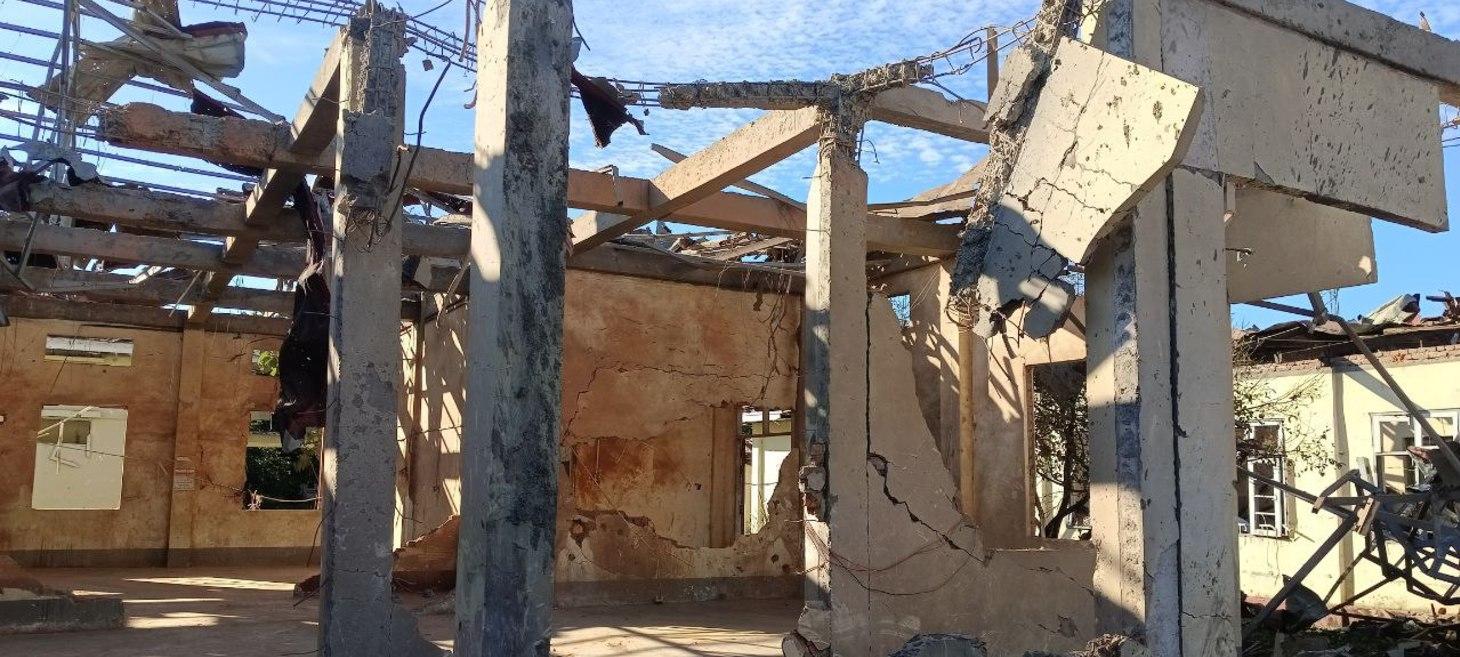
‘Utterly inhumane’: Mrauk-U witnesses recount hospital airstrike horror
Myanmar military jets targeted Mrauk-U Hospital in Rakhine State with two 500-pound bombs, leaving the major healthcare center—which serves communities across the state, including areas under Arakan Army (AA) control—in ruins. The catastrophic airstrike killed at least 34 to 35 people, including children and infants, and injured over 70 others, with witnesses describing horrific scenes of scattered bodies, metallic wreckage, and raging fires. This tragedy is viewed as reflecting the junta’s growing reliance on indiscriminate air power against civilian infrastructure like hospitals as it loses ground, drawing strong international condemnation, including from the World Health Organization.
myanmar-now.org

Colonel killed in ambush on Myanmar junta convoy in Monywa
A Myanmar junta military convoy was attacked on the Union Highway in Monywa, Sagaing Region, on December 7, 2025, by the 5/Fighter group, supported by an alliance of groups including the BLDF, PLA, and others. The ambush reportedly lasted about 15 minutes and resulted in the deaths of 10 junta personnel, including Colonel Tin Ko, Captain Soe Min Oo, and an interrogation officer, with the resistance forces reporting no casualties. Following the incident, approximately 40 military vehicles were deployed by junta troops for clearance operations, but Mizzima has not independently verified the reported deaths.
mizzima.com
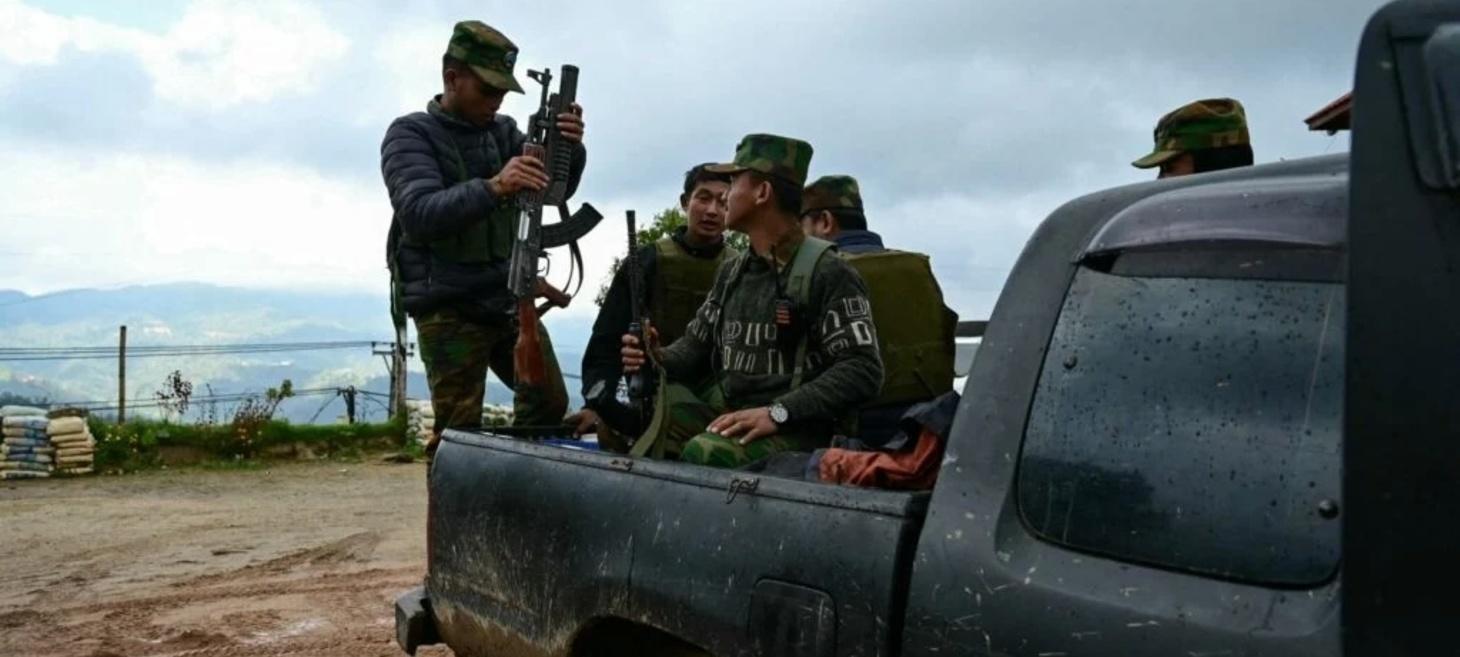
‘Hard to fight’: Weapon shortages hamper resistance groups
Weapon and ammunition shortages are severely crippling resistance groups in Myanmar’s central Dry Zone after ethnic armed organizations (EAOs) in northern Shan State ceased supplying arms following increased pressure from China to sign peace agreements with the military junta. This strategic shift, highlighted by the United Wa State Army's decision to halt support and travel routes, caused the prices of necessary weapons and ammunition to surge dramatically, with items like automatic rifles jumping from around K10 million to K25 million. Facing prohibitive costs—with one major battle potentially requiring K25 million worth of bullets alone—resistance forces are now forced to retreat, avoid large-scale clashes, and spend their time fundraising, severely hampering their ability to fight or launch offensives against the advancing military.
frontiermyanmar.net
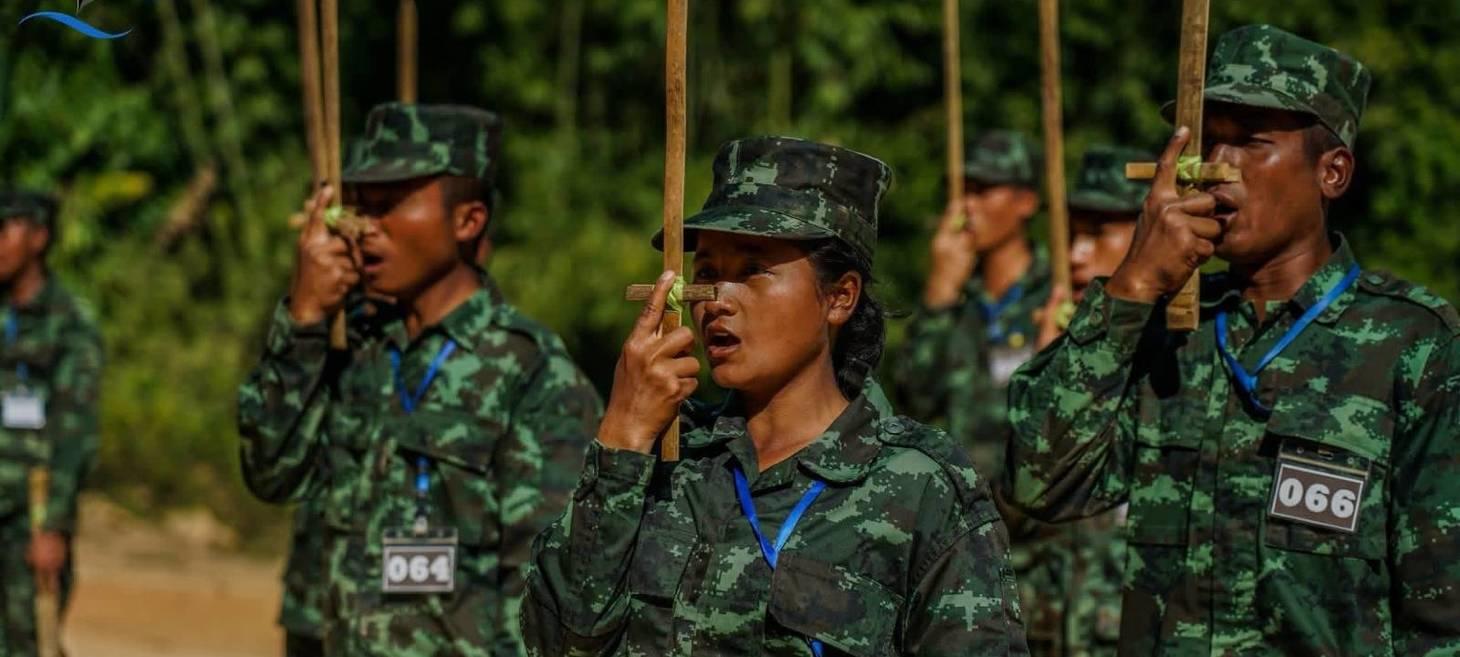
Nineteen resistance groups form Spring Revolution Alliance to oppose junta
Nineteen independent resistance groups announced the formation of the Spring Revolution Alliance (SRA) in December 2025, uniting under a new coalition to oppose military rule and pursue federal democracy. The alliance was created to strengthen unity and establish a more systematic chain of command among post-coup resistance groups, aiming to improve coordination and accelerate military operations against the junta. Formed nearly five years into the revolution to address challenges such as the absence of a clear command structure, the SRA’s formation was welcomed by the civilian National Unity Government (NUG) as a significant boost to the resistance movement.
myanmar-now.org
Crime & Narcotics
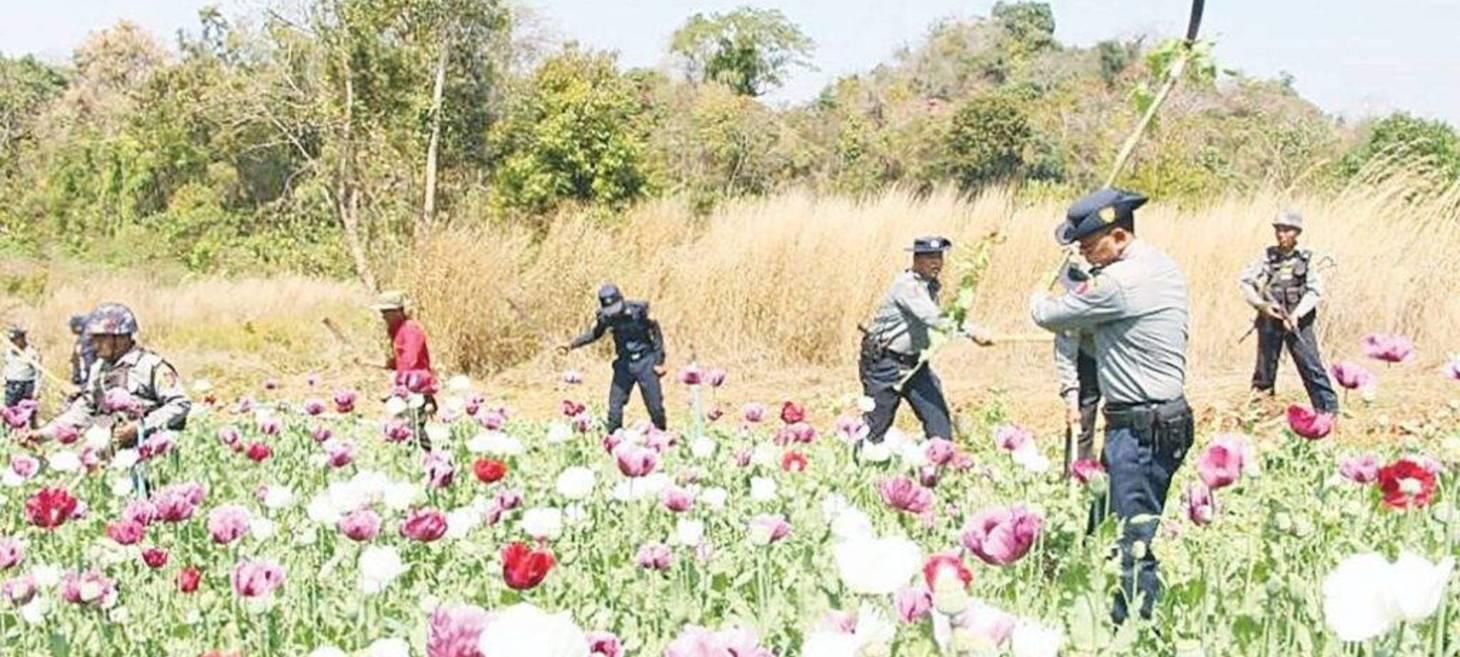
“Only for Show”: Farmers Accuse Authorities of Staged Opium Destruction in Shan State
Residents in Southern Shan State accuse authorities, including junta police and PNO militia forces, of orchestrating staged opium destruction by forcing farmers to prepare designated plots that are later destroyed in purely symbolic operations. Since the coup, the number of families growing opium has increased dramatically as it is often the only way to survive rising costs. Still, farmers must pay nearly 500,000 kyats per household to armed groups like the military and PNO to avoid having their real fields destroyed. This practice occurs while Myanmar has become the world’s largest opium producer due to significant cultivation expansion in Southern Shan State, despite the Myanmar Police Force announcing the destruction of over 140 acres of fields in the area during the first week of December.
shannews.org
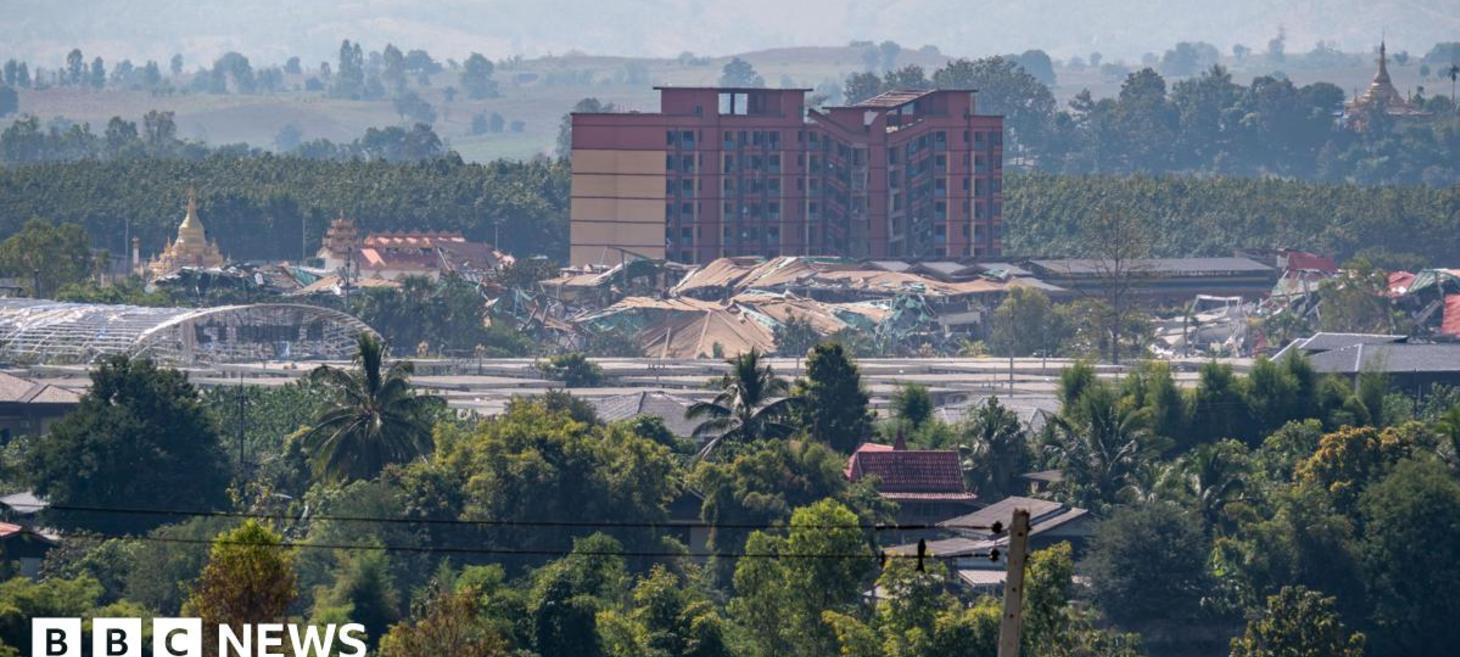
Myanmar's army says it wants to eradicate scam compounds. Is it really doing that?
The Myanmar military junta claims it is working to "completely eradicate" online scam activities run by Chinese crime syndicates, a process highlighted by the storming and demolishing of buildings with explosives in compounds like KK Park. This high-profile operation is seen as a way for the military, which previously turned a blind eye to the multi-billion dollar business and profited from it, to clean up its international image and appease its closest ally, China, ahead of a planned election. Despite the focus on KK Park, which drove out thousands of foreign workers, the overall scam business is still thriving as infrastructure remains partially intact in raided areas and many syndicates have relocated to more remote parts of Myanmar.
bbc.co.uk
Cybersecurity & Cybercrime
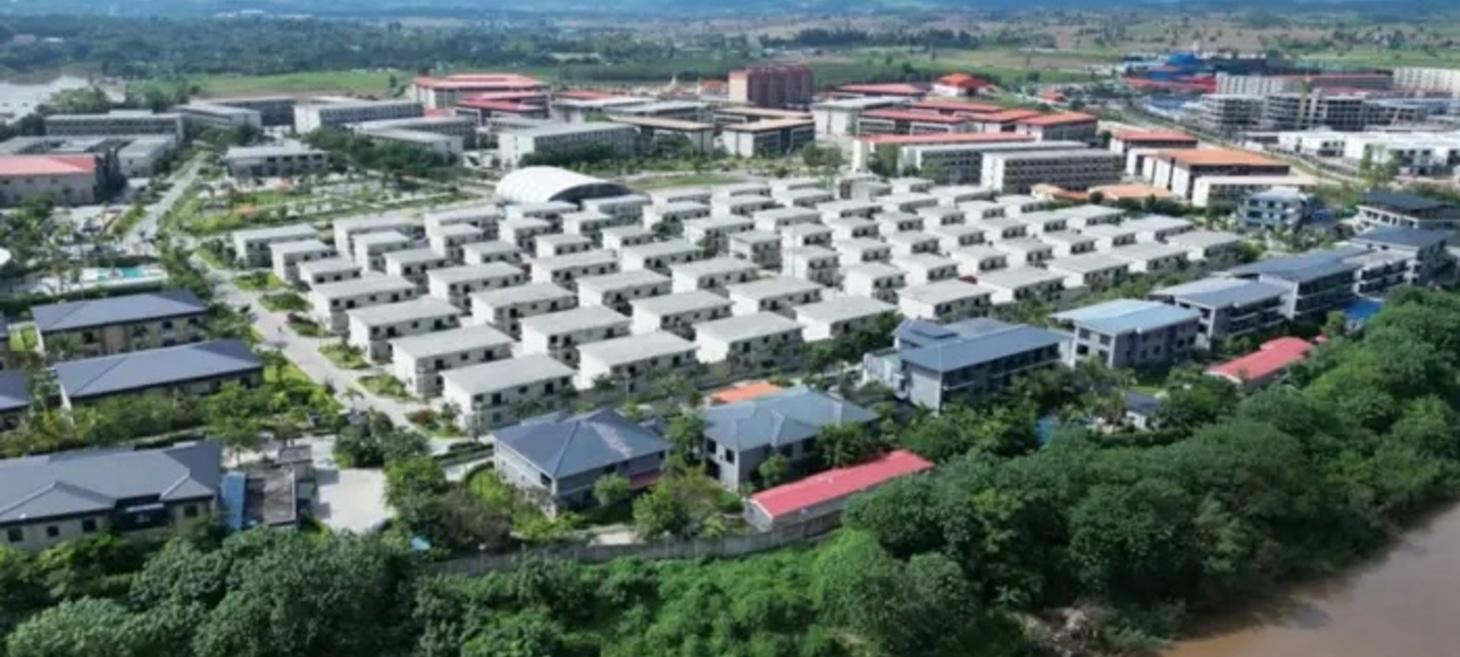
'We'll wipe them out, ' Myanmar reiterates on telecom fraud, online gambling eradication
Myanmar held a press conference to reiterate its commitment to eradicating telecom fraud and online gambling, which Zaw Min Tun, leader of the Information Team of the National Defense and Security Council, described as a threat undermining national security, stability, public trust, economic security, and the country's dignity. In response, Myanmar has launched special operations over the past two years, resulting in the repatriation of over 70,000 foreign nationals involved in these crimes to 54 countries, and has begun demolishing scam centers, having already taken down 398 buildings in the KK Park area. A national-level Central Supervisory Committee was established on December 10 to combat online fraud in border areas and prevent its domestic spread. Still, Myanmar insists it is not the primary beneficiary of these crimes and is calling on international organizations for practical assistance in intelligence sharing, technology, and training.
thestar.com.my
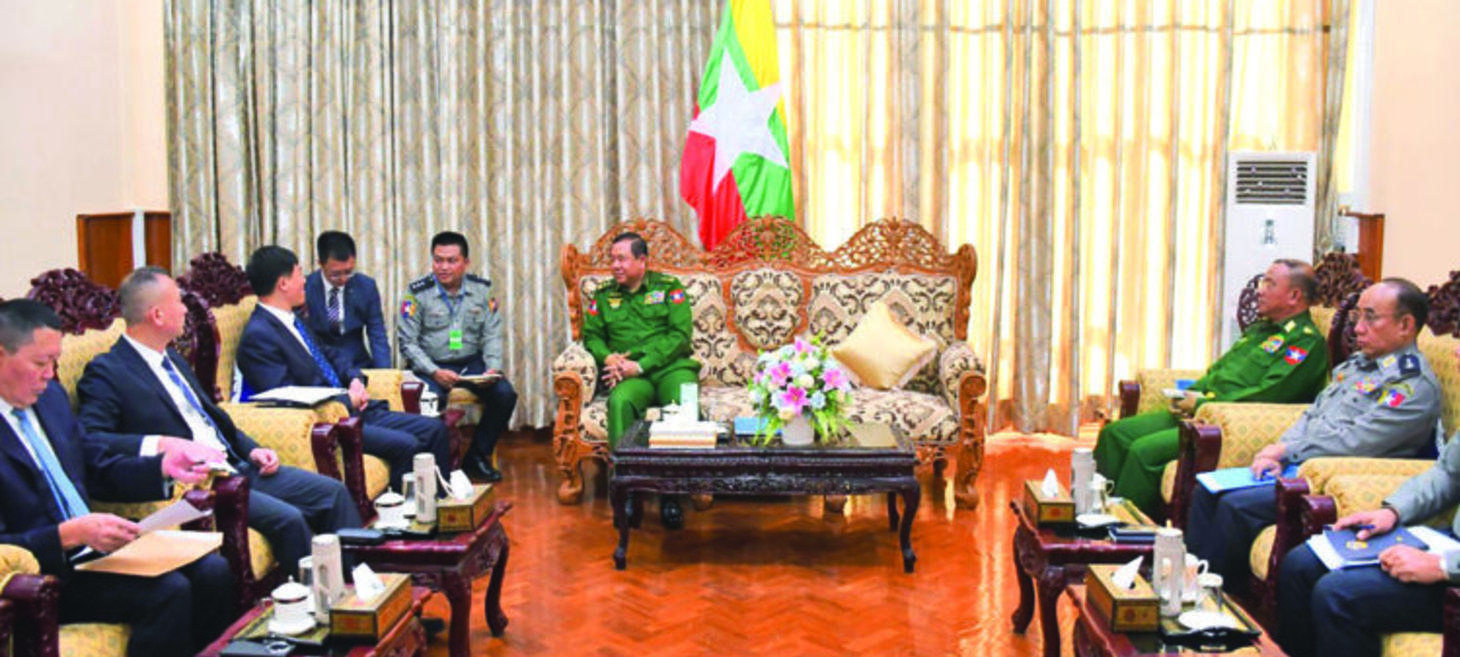
China and Myanmar Junta Warn Against ‘Foreign Meddling’ in Scam Crackdown
China and the Myanmar junta have stepped up coordination to combat Chinese-led telecom fraud and online gambling networks operating along the Thai-Myanmar border, simultaneously rejecting "foreign interference" under the pretext of addressing the issue. This regional focus, underscored by the visit of Chinese Assistant Minister of Public Security Liu Zhongyi, is intended to keep the crackdown under their control and exclude the United States, which has formed a Scam Center Strike Force and sanctioned junta-allied armed groups accused of running the scam operations. Although the junta has staged raids and admitted to official involvement in the scams, analysts suggest China is protecting the regime, which it views as a "puppet government," because it fears Washington may take direct action against the operations.
irrawaddy.com
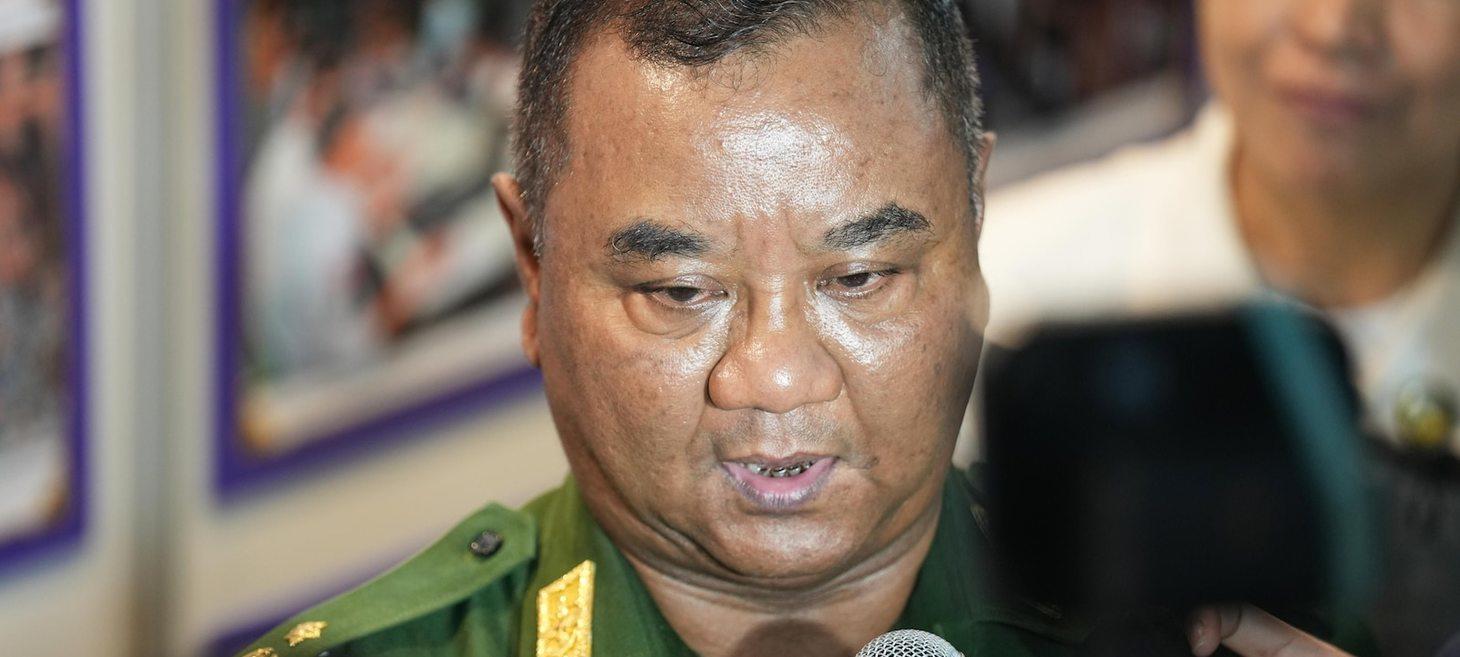
Myanmar calls on countries to take back citizens held in crackdown on scam centers
Myanmar's military regime appealed to the international community to take back their nationals who were detained in a major crackdown on cyber scam centers located in the eastern Kayin state near the Thai border. The operations have led to the detention of thousands of foreign nationals. While 13,272 people from 47 countries have been detained since January, 1,655 are still awaiting deportation, posing management challenges for the authorities. These cyber scam operations—which involve luring people into bogus investment schemes and are estimated by the U.N. to generate nearly $40 billion in annual revenue—are delaying the return of some detainees, especially those from African countries lacking embassies in Myanmar or Thailand.
go.com
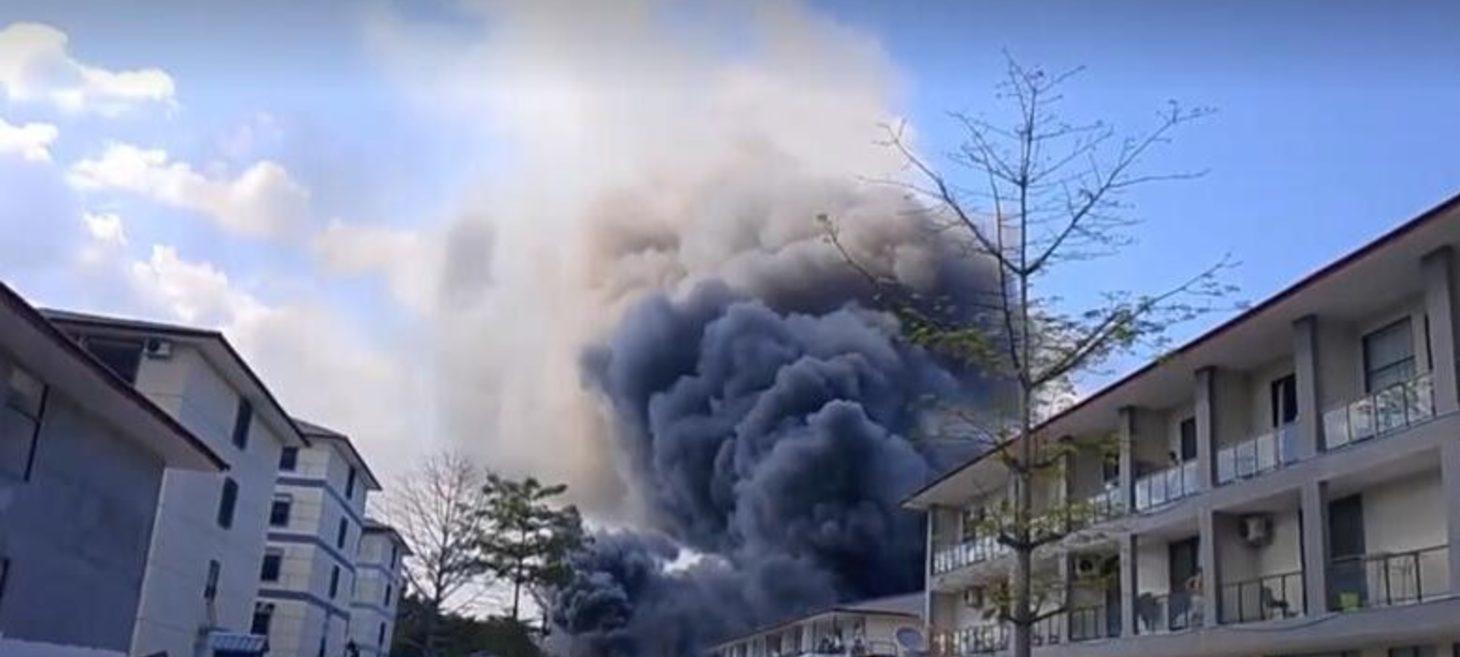
Fire erupts at telecom scam compound captured by KNU
A fire broke out on December 8 at the Shunda Park telecom scam compound near Min Let Pan Village in southern Myawaddy Township, Karen State, after the Karen National Union (KNU) had exposed the site, which had been covertly operated under the protection of the junta-aligned Democratic Karen Benevolent Army (DKBA). Since December 6, the Karen National Liberation Army (KNLA), the armed wing of the KNU, has taken full control of the compound, which the junta subjected to at least three airstrikes and several artillery attacks after its exposure. The compound's current occupants are KNLA troops and foreign scam workers who refused repatriation, some of whom the KNU alleges have attempted to set fire to buildings, though the official cause of the December 8 fire remains under investigation.
karennews.org
Economy
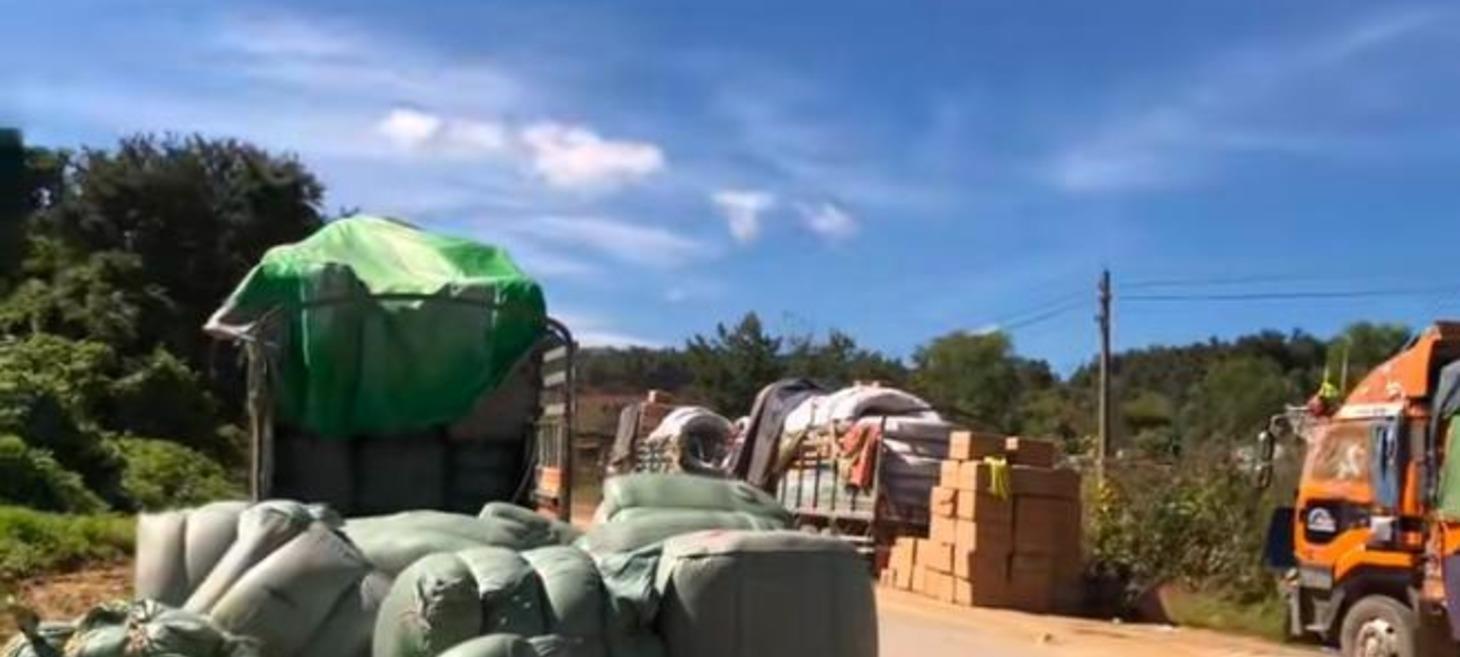
Transport Delays Mount as Junta and Militias Tighten Checks in Southern Shan State
Trucks carrying goods in Southern Shan State are experiencing severe disruptions and long delays due to heightened inspections and escalating fees imposed by the military regime and allied militias at numerous checkpoints along routes such as Mong Pawng–Loi Lem and Hopong–Taunggyi. At checkpoints such as the Mong Pawn checkpoint, drivers transporting foreign-made consumer goods are required to unload every item for individual inspection, a process that can take nearly a full day and significantly increases transport costs. These tight restrictions, including heavy fees (e.g., 80,000 to 100,000 Kyats) and arbitrary seizures related to the ban on transporting non-duty-paid foreign goods, have led to widespread extortion, damage to goods, and severe financial hardship, prompting some operators to suspend operations.
shannews.org

Wanbao copper mine to suspend operations until after election
The Chinese-backed Wanbao copper mine in Sagaing Region's Salingyi Township has temporarily suspended operations from the first week of December through the end of February 2026, coinciding with the junta’s phased elections. Although the company stated the suspension was due to "difficulties in obtaining fuel," locals and former employees suspect the temporary cessation is a response to the increased risk of attacks by resistance forces opposing the elections, who frequently launch assaults on junta troops guarding the project site. The copper project, which resumed operations earlier this year after shutting down following the 2021 coup, is jointly owned by a Chinese state-owned subsidiary and a military-operated company, generating hundreds of millions of dollars in revenue for the junta.
myanmar-now.org
Elections
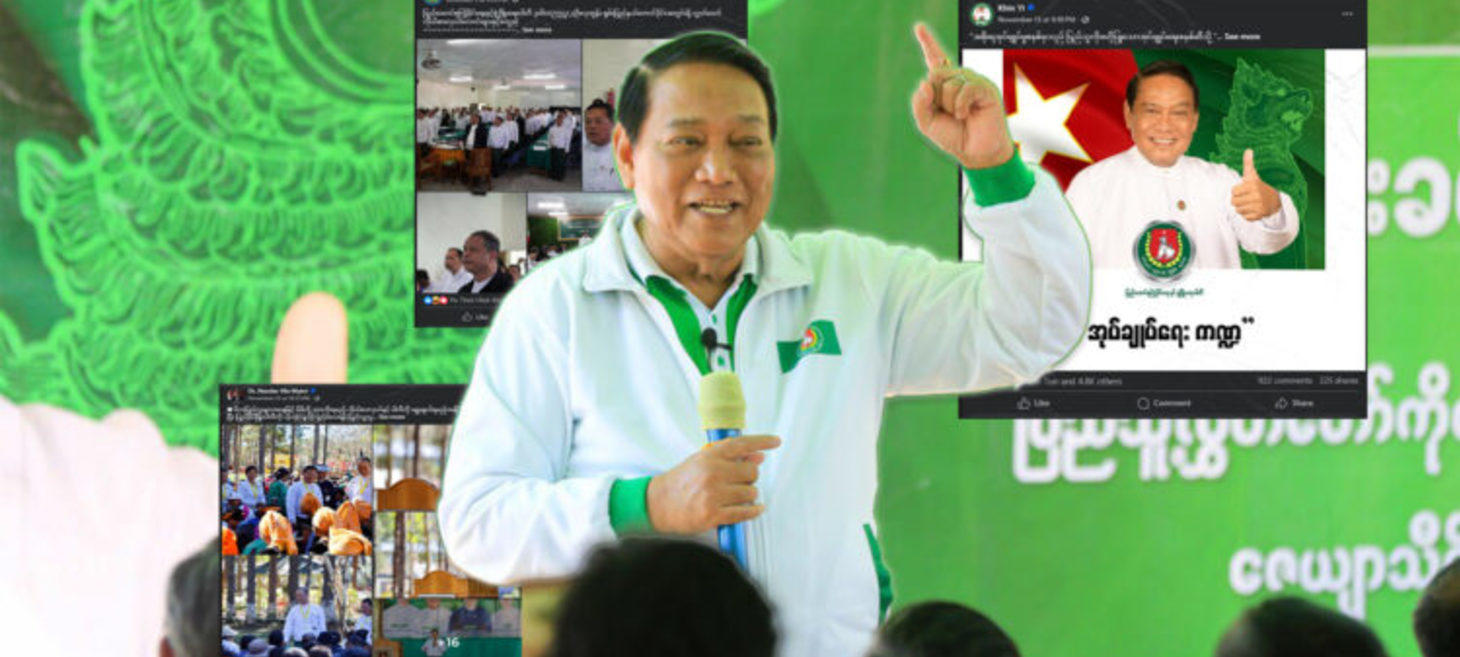
Myanmar Military’s Favorite Election Campaign Platform? Banned Facebook
The junta’s proxy, the Union Solidarity and Development Party (USDP), is vigorously campaigning on the year-end election through Facebook, a platform the junta blocked to suppress dissent and control information, even though millions of Myanmar citizens are officially barred from accessing it. While the USDP uses Facebook by accessing it via forbidden VPNs and claims that only bypass providers, not users, need licenses, ordinary people can be arrested or extorted simply for having a VPN app on their mobile phones. The USDP launched its campaign months before the official period, using high-output social media tactics like reels and comment-reply videos across Facebook and other platforms, leading opposition figures to accuse the party of being blatantly favored and preparing for a "sham election".
irrawaddy.com
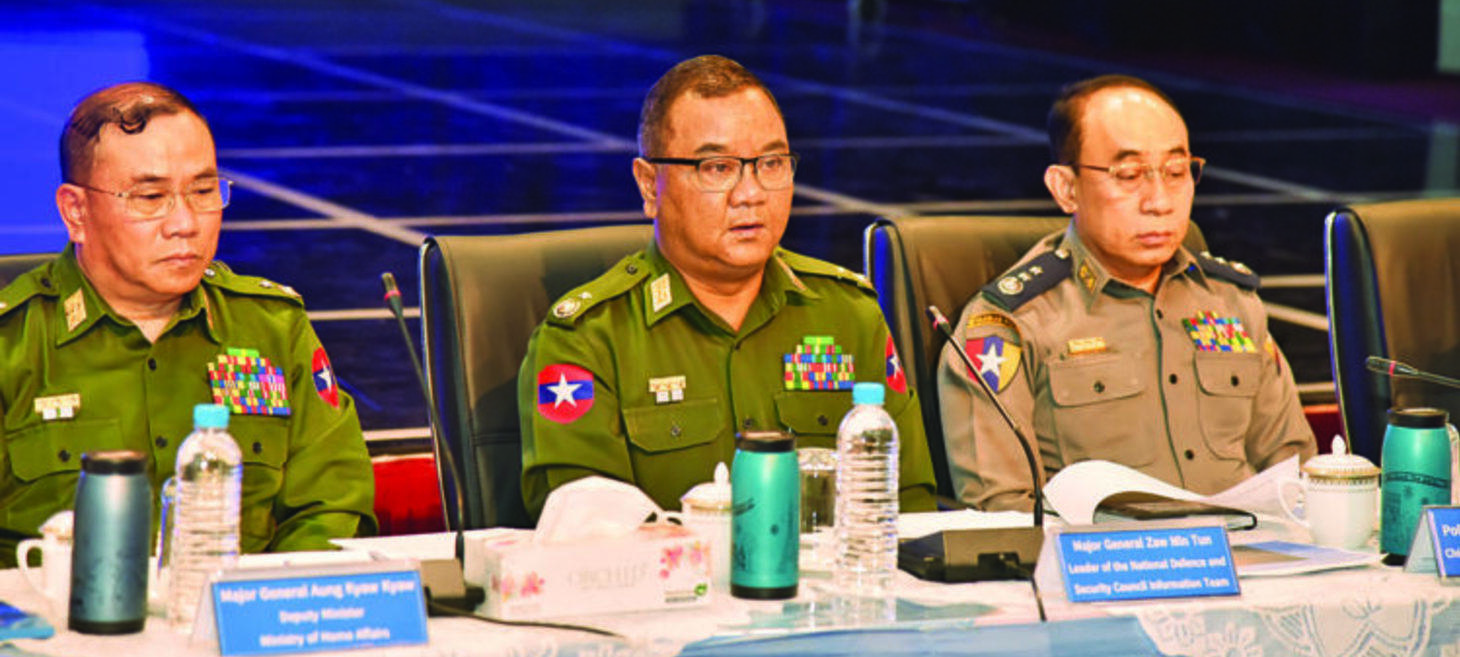
Myanmar Junta Hits Back at Criticism of Military-Run Poll
Myanmar’s military government is proceeding with phased elections starting December 28, despite international criticism from monitors, the UN, Britain, and Thailand who brand the vote as undemocratic and an effort to rebrand military rule following the 2021 coup. Junta spokesman Zaw Min Tun insisted the election is intended to restore a multi-party democratic system for Myanmar, not the international community, while hinting that junta chief and acting president Min Aung Hlaing could have a continued leadership role based on his "experience in state duties". However, the election faces intense resistance, as the National League for Democracy party has been dissolved and its leader detained, rebels have vowed to block the vote, and the military has enforced harsh new legislation punishing protest against the election with long prison terms.
irrawaddy.com
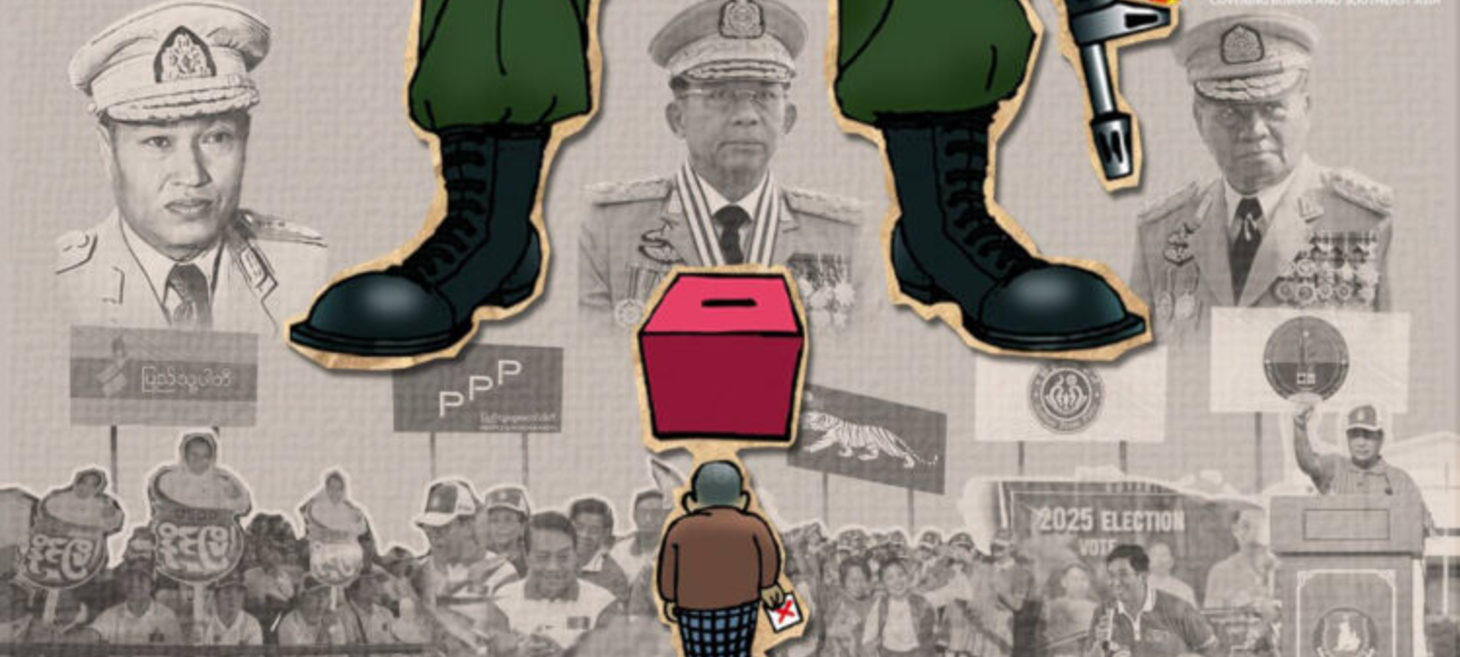
Commentary | The Election — Another Political Trick by Myanmar’s Generals
The junta’s planned election is widely viewed as a predetermined political scam, with the public quietly opposing it out of fear and "election trauma" from previous nullified votes. In contrast, the political parties participating in the junta’s roadmap are anxious. The military generals, meanwhile, are confidently plotting the outcome, ensuring their political arm, the Union Solidarity and Development Party (USDP), will win and that loyalists are positioned for top roles in the government and parliament. This election is masterminded by junta chief Min Aung Hlaing, who intends to become president and secure two terms, leading to a government designed solely to ensure his absolute control and survival, rather than to offer any genuine political change or concessions.
irrawaddy.com
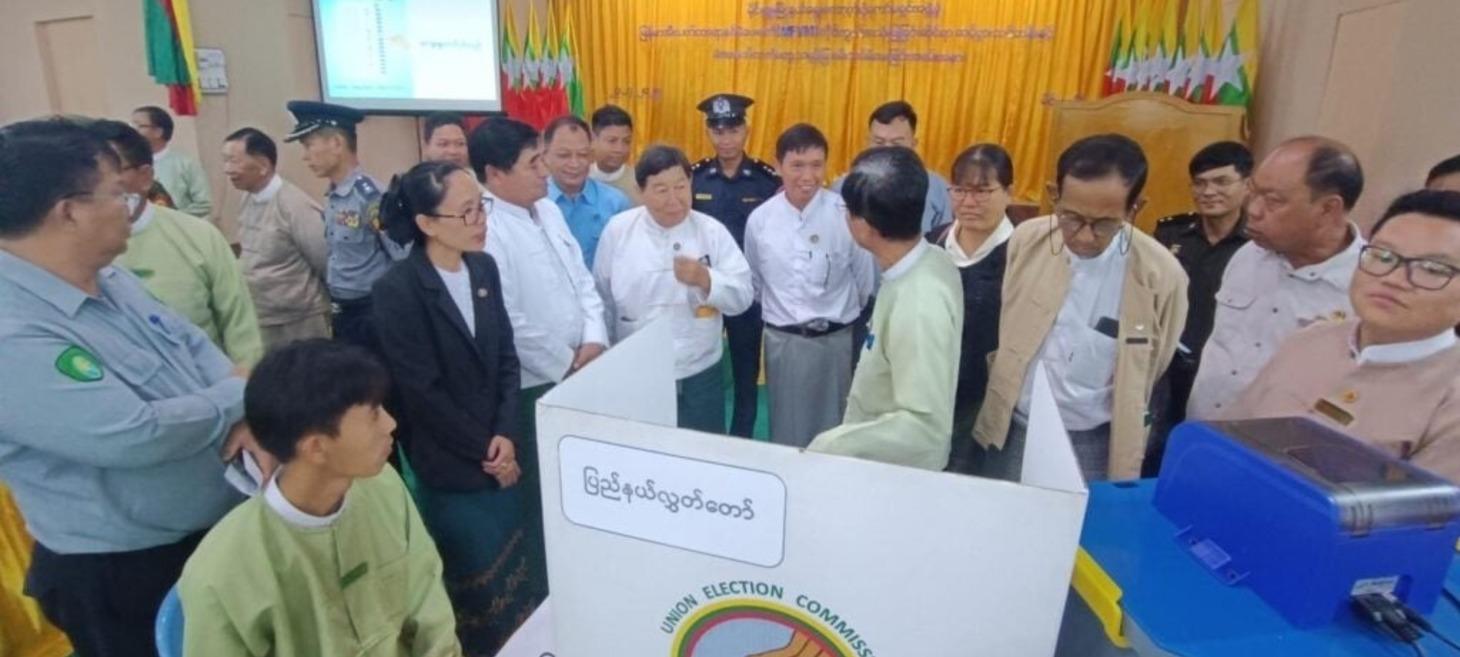
Junta Forces Villagers in Ywangan and Pangtara to Perform Guard Duty Ahead of Sham Election
Junta troops have been deployed to villages across Ywangan and Pangtara (Pindaya) townships in southern Shan State, compelling residents to construct guard posts and participate in rotational night guard duty ahead of the planned election. This mandatory security measure is being enforced in villages in tracts covered by the first and second phases of the regime's election (scheduled for December 28 and January 11), with villagers reporting that they must stand watch at night while soldiers remain inside the village. Residents believe these actions, alongside increased checkpoints and patrols, are intended to ensure the election proceeds as planned, even though the tightening security has created an atmosphere of intimidation and failed to stop continued violence in the region.
shannews.org
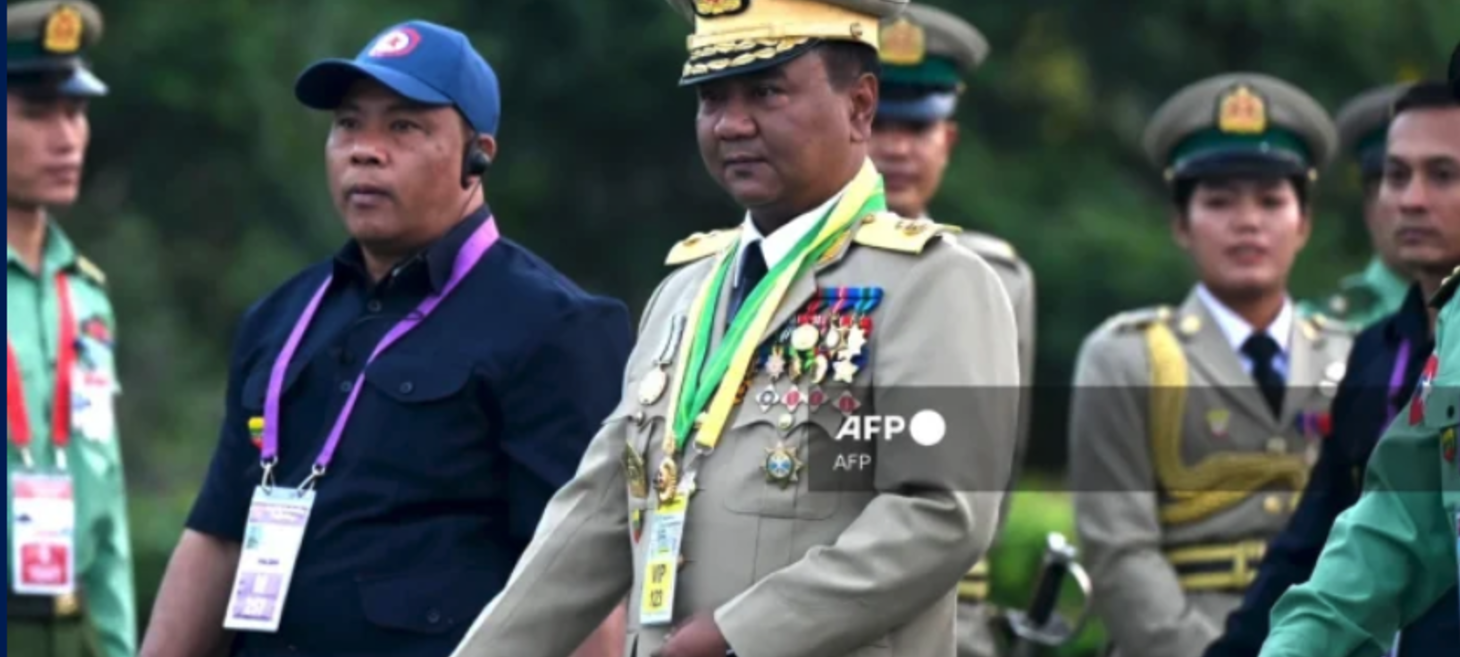
Myanmar junta defends upcoming election amid international criticism
Myanmar’s military government defended its upcoming phased elections, scheduled to begin on December 28, 2025, against international criticism that the vote is neither free nor fair, stating that the election is intended for Myanmar, not the global community. In Malaysian governance, the government approved RM470 billion for Budget 2026, announced major military upgrades, sanctioned 141 flood mitigation projects under the 13th Malaysia Plan, and is preparing to begin Free Trade Agreement (FTA) talks with Gulf nations early next year. Regional issues include the enforcement of Malaysia's new online safety law on global platforms starting in 2025 and severe rain warnings issued by MetMalaysia for the east coast until Thursday, emphasizing the crucial need for end-to-end early warning systems in Southeast Asia,,.
thesun.my

Why Myanmar’s Conflict Persists: An Interview with Sao Harn Yawnghwe
Sao Harn Yawnghwe argues that the military’s upcoming election is not a democratic exit strategy but a mechanism designed to regain international legitimacy and permanently secure its political role by reinstating the 2008 Constitution, noting that the outcome cannot reflect the people's will since major opposition parties are excluded. Peace efforts, including the failure of the Nationwide Ceasefire Agreement (NCA), remain stalled because the military’s decades-long approach favors confrontation over genuine political dialogue, creating an environment in which opposing fundamental goals—the military's commitment to the 2008 Constitution versus revolutionary groups' demand for its abolition—make consensus impossible. Continuing to use force alone is viewed as the "wrong path" that will only escalate the conflict, leading to severe civilian suffering, risking the "loss of the country itself," and potentially inviting damaging foreign intervention, emphasizing that the military must first stop bombing civilians and declare a unilateral ceasefire to demonstrate sincerity.
shannews.org
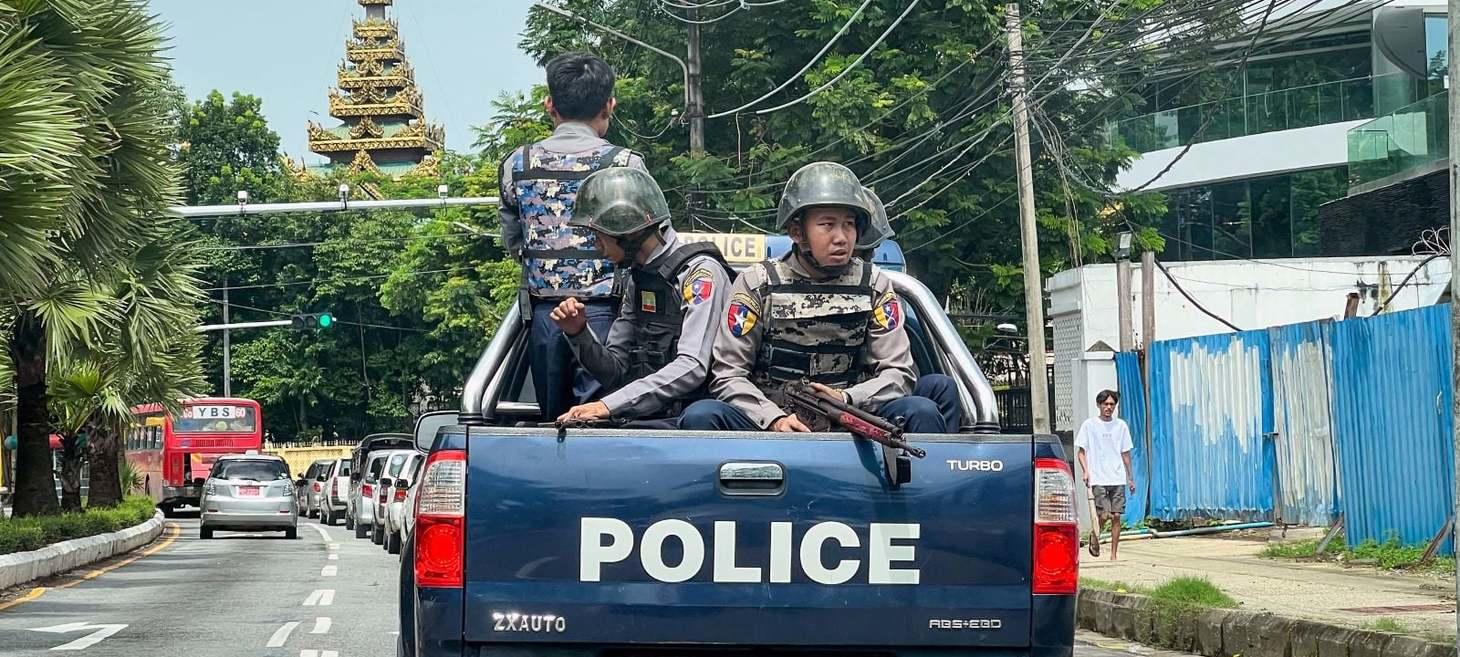
‘An election held under fear’: Junta persecutes critics of its poll
Myanmar’s regime is holding a controversial election, widely derided as a sham, and is using the Law on the Protection of Multiparty Democratic General Elections from Obstruction, Disruption, and Destruction (Election Protection Law) to criminalize any criticism of the poll. The regime is persecuting a wide range of individuals under this law, including film stars who refused demands to promote the election, and ordinary citizens and minors arrested for minor actions like reacting to Facebook posts or pasting critical stickers. Sentences for those convicted are severe, ranging up to decades in prison for non-violent acts, as the junta utilizes these harsh punishments as an intimidation tactic to remove obstacles and ensure the election proceeds.
frontiermyanmar.net
Ethnic Issues
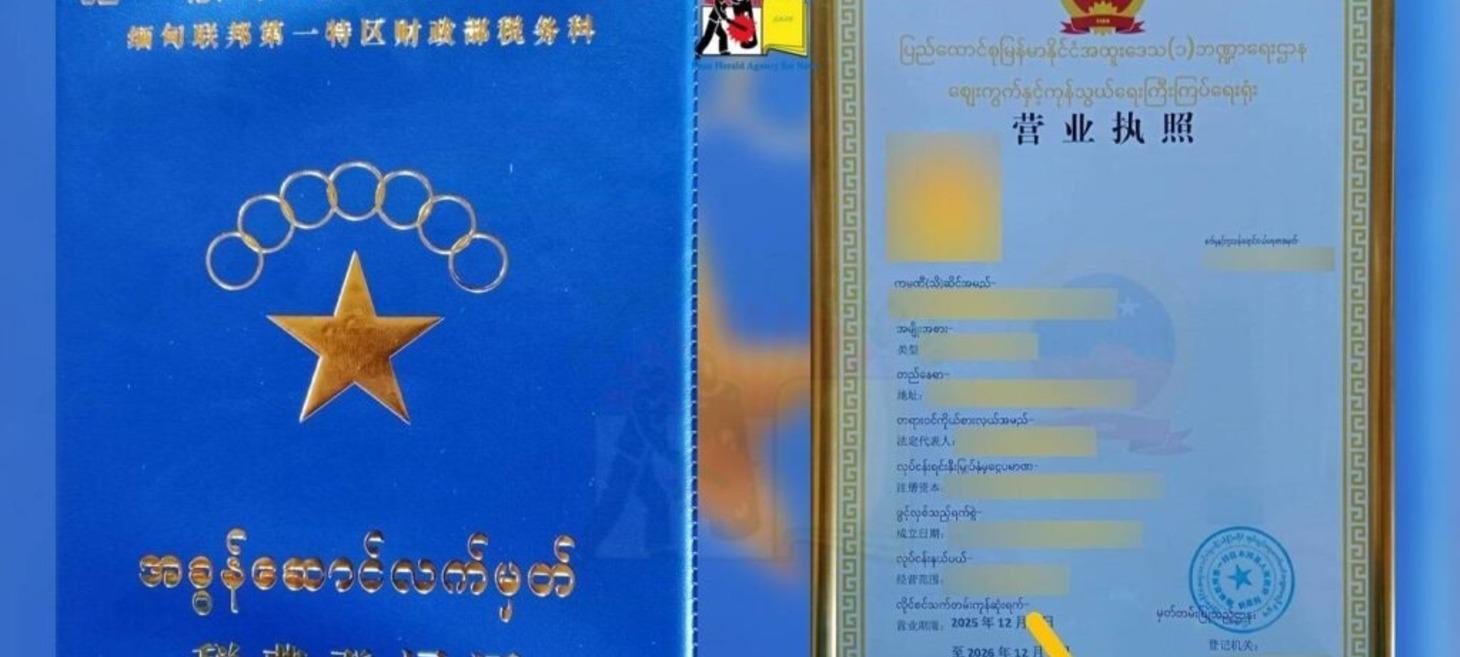
MNDAA’s New Tax Measures Burden Small Shops Along Lashio–Mong Yai Road
The Myanmar National Democratic Alliance Army (MNDAA), also known as the Kokang Army, has begun implementing new tax measures and business registration requirements for small shops along the Lashio–Mong Yai road in northern Shan State, with officials measuring premises to determine 2026 tax liability based on shop size. The new tax structure calculates payments per square foot (ranging from 2 to 5 Chinese Yuan). When combined with mandatory additional fees, such as business, health, and security taxes, total costs could range from 600,000 to 1,000,000 Kyats per shop. This financial burden, along with the requirement for vendors to purchase tax receipt books for around 50,000 Kyats and repeatedly update signboards to include Chinese text, is making the cumulative costs unmanageable for small-scale businesses, leading some to consider closing,,.
shannews.org
Foreign Affairs
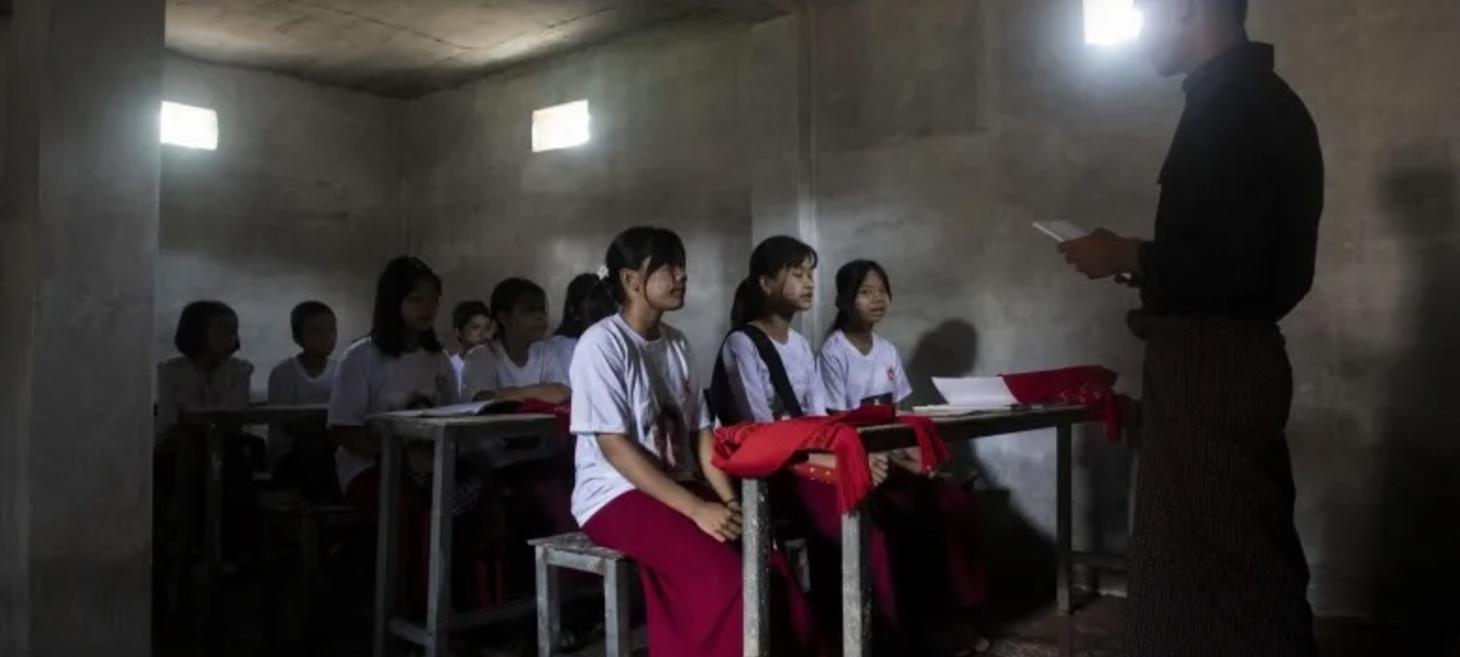
Trump’s visa ban is crushing young people in Myanmar
The Trump administration’s Proclamation 10949, an expansive visa ban, prevents students from Myanmar who had prepared for years and invested substantial resources from attending college in the U.S., adding another burden to a country already struggling with a military coup and ongoing civil war. This ban is emotionally crushing for youth like Kyi Noo Khin, who had secured college acceptance and invested thousands of dollars in preparation, as studying abroad represents a vital lifeline to escape mandatory military conscription and the worsening education system under the military junta. Although the ban utilizes administrative factors like high visa overstay rates and noncooperation with deportations as justification, critics argue this policy is unjust and undermines Washington’s stated commitment to supporting democracy in Myanmar, choosing instead to treat the entire population as a security risk.
prismreports.org
Telecommunications
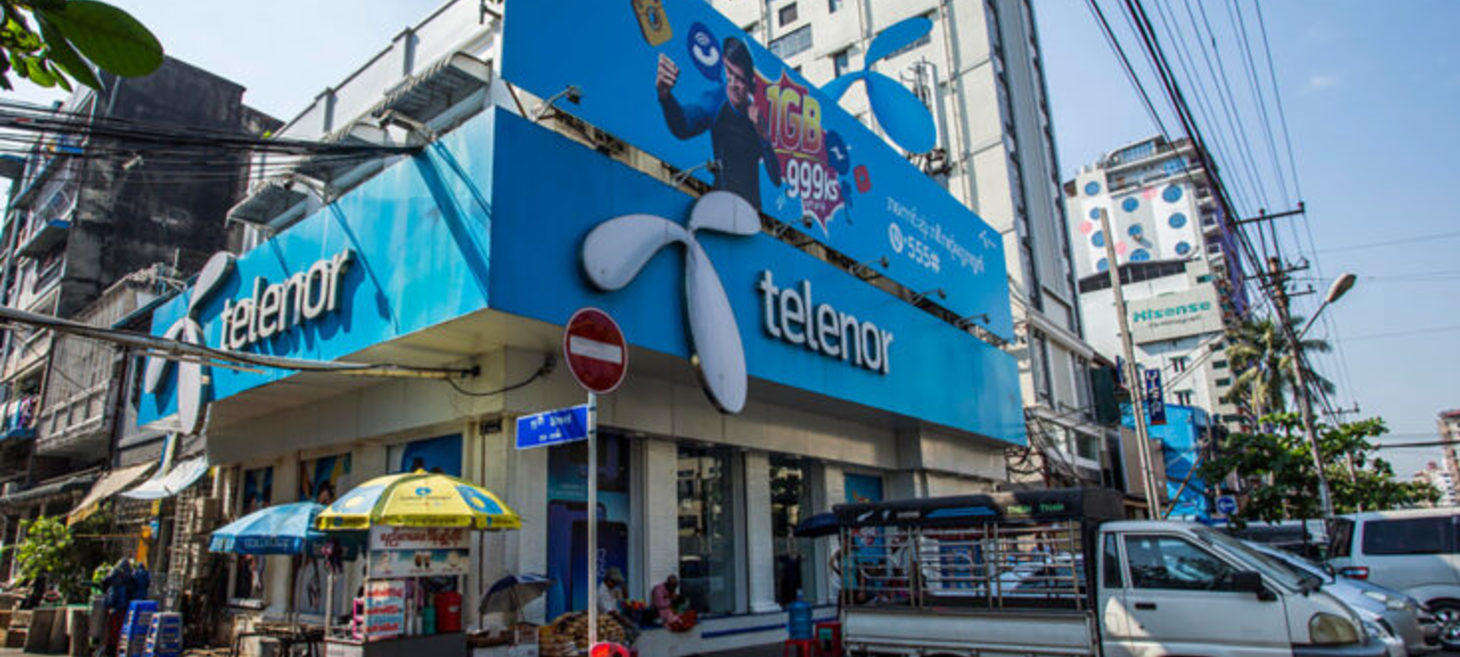
Telenor rejects key criticism in OECD review of Myanmar exit
Telenor issued an official response to the Norwegian OECD National Contact Point’s (NCP) final statement on its forced exit from Myanmar in 2022, rejecting several key conclusions while acknowledging the dilemmas Telenor faced. Telenor contends that the safety of its Myanmar employees was the determining factor in its decisions, arguing that the NCP underestimated the security risks staff faced and maintaining that it did not activate lawful interception technology. The company believes that key facts were overlooked because sensitive internal risk assessments could not be shared with the NCP due to safety concerns, and it is now pushing back against public criticism and planned legal action.
scandasia.com
Weather & Environment
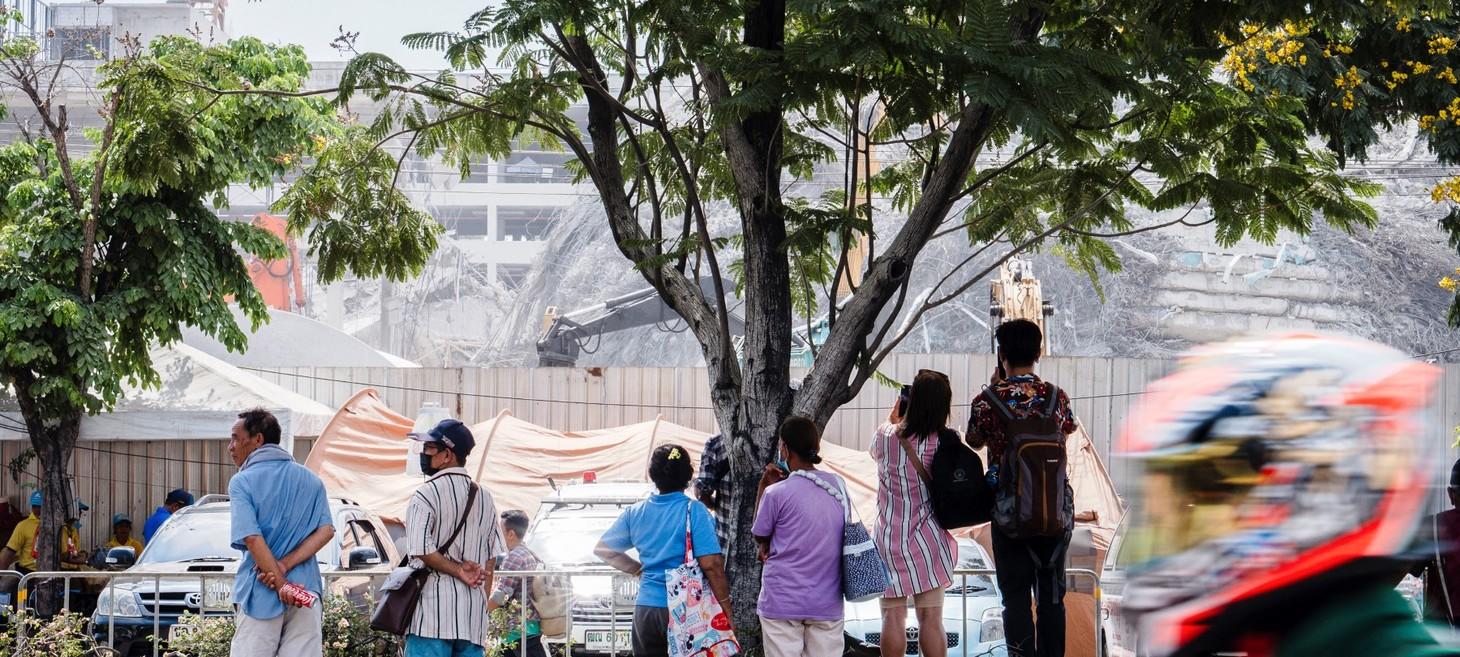
Frequent earthquakes recorded around Thailand, Myanmar, and Indonesia
Recent data from the Earthquake Observation Division confirms that fault lines surrounding Thailand remain active, necessitating the close monitoring of three key zones: Myanmar near the Thai border, off the coast of Indonesia near Sumatra, and active domestic faults within northern Thailand. Myanmar continues to be the most active source, with frequent quakes strong enough to be felt in northern Thailand, while Indonesia has experienced moderate offshore earthquakes confirming the activity of a major subduction zone. This increased number of small to moderate earthquakes signifies ongoing movement of the Earth’s crust and the release of accumulated stress along fault lines, which serves as a reminder for agencies to strengthen preparedness for any potential larger earthquakes.
asianews.network